
I am Eason. Today I want to talk about water. Specifically, I want to talk about how to keep water out of your LED strips. I live in China with my wife and my two sons. Last week, it rained very hard here. My sons went outside to play in the puddles. They wore their yellow rain boots. They jumped and splashed for an hour. When they came inside, their socks were perfectly dry. Why? Because the boots are made of one solid piece of material. There are no holes. There are no seams. This is a simple lesson. If you want to keep water out, you must have a perfect, solid seal. In the lighting world, we call this IP68. In 2026, many customers want to put their 1615 and 1212 neon flex in swimming pools or near the ocean. If you use old methods like manual glue injection, you will fail. You need a professional LED silicone strip extrusion machine that uses co-extrusion technology. This is the only way to get a real IP68 rating that lasts for years.
I have spent a lot of time on factory floors in Russia and Saudi Arabia. I see many owners trying to save money by using cheap glue to seal the ends of their PVC or silicone strips. They think they are being smart. But then they get a phone call from a client. The lights in the pool are turning black. Water has leaked inside. This is a “huge work” to fix. You have to drain the pool. You have to replace the lights. You lose your reputation. I love hiking in the mountains. When I hike, I need a waterproof jacket. If the jacket has a bad zipper, the rain gets in. I get cold and I have to stop. Your factory should not stop because of a bad seal. A high-quality LED silicone strip extrusion machine creates the strip and the waterproof cover at the same time. This is the secret to a perfect product.
1. The Failure of Manual Glue-Injection Methods in 2026
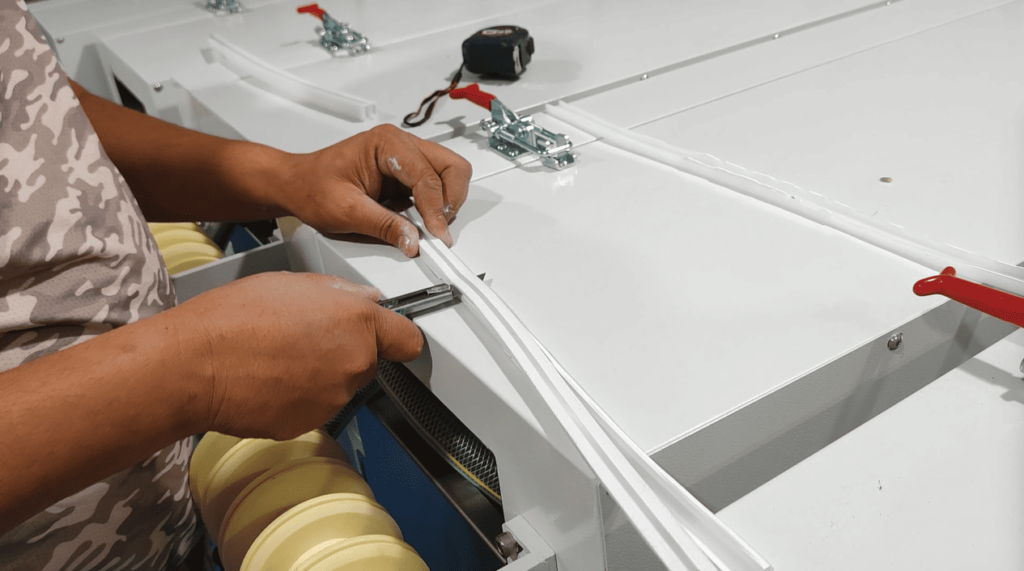
The first thing you must understand is why glue fails. In the past, workers would take an extruded strip and then pump glue into the ends. This is a very slow process. It depends on the skill of the worker. If the worker is tired, he might leave a tiny bubble. Water is very small. It can find even the smallest hole. Also, glue and silicone do not always bond perfectly. Over time, the heat from the LED makes the materials expand and shrink. This movement creates a gap. Once the gap is there, the IP68 rating is gone. Your 1615 neon flex is now just a piece of trash in a pool.
I want to dive deeper into why the bonding of glue is so unreliable. When you use an LED silicone strip extrusion machine, the material is hot and active. When you add glue later, the silicone has already cured. Cured silicone is very hard to stick to. It is like trying to tape something to a non-stick frying pan. Even the best industrial glue only creates a “mechanical” bond. This means it just sits on top of the surface. It does not become part of the material. In 2026, we see that environmental temperatures are getting more extreme. In Saudi Arabia, the sun is very hot during the day. At night, it gets cool. This thermal cycling makes the materials move a lot. The glue eventually peels away from the silicone wall. I have seen this under a microscope many times. You see tiny cracks at the edge of the glue. Water uses capillary action to pull itself into those cracks. Once the water touches the copper on the LED PCB, it starts to corrode. This creates “dark spots” or short circuits. This is why manual glue injection is a dying method. It cannot survive the high standards of 2026. A professional factory must move to integrated co-extrusion. This is where the LED silicone strip extrusion machine handles the seal during the manufacturing process. It is the only way to guarantee that the internal LED is protected from the first second.
2. How Integrated Co-extrusion Creates a Permanent Seal
The real solution is co-extrusion. This means your LED silicone strip extrusion machine has two or three extruders working together. One extruder pushes the white base silicone. Another pushes the transparent or milky top silicone. They meet inside a high-precision CNC mold. Because they are both in a raw, uncured state, they melt into each other. They become one single piece of silicone. There is no “line” between them. There is no gap for water to enter. This is what we call a “molecular bond.” It is much stronger than glue.
I want to dive deeper into the science of the molecular bond in silicone extrusion. When the two types of silicone meet in the mold of the LED silicone strip extrusion machine, the polymer chains are still open. They are looking for other chains to connect with. When they touch each other under high pressure, they weave together. Then they go into the vulcanization oven. The heat locks them together forever. You can try to pull them apart with a machine, and the material will tear before the bond breaks. This is why a co-extruded 1615 or 1212 strip is so durable. It is a solid tube of silicone with the LED strip trapped safely inside. There is no air inside if you set the machine correctly. Air is also an enemy. Air can hold moisture. If there is air inside the strip, the moisture will turn into water drops when the temperature changes. This is called condensation. A professional LED silicone strip extrusion machine uses a “vacuum-assisted” mold. This pulls all the air out before the silicone seals around the light. This means your strip is perfectly clear and perfectly dry inside. I tell my two sons that a good sandwich is all about how the layers stick together. In extrusion, we want the layers to be one. I use my CNC knowledge to design the internal paths of the mold to make this happen. We balance the pressure of the two extruders so the “fusion zone” is perfect. This is the hardware secret that makes our machines better than the cheap ones.

3. 1615 and 1212 Profiles: Precision for Underwater Use
In 2026, the most popular sizes for underwater lighting are the 1615 and 1212 profiles. The 1615 is a big, bright strip. It is great for the edges of large pools. The 1212 is smaller and more flexible. It is perfect for curved features or fountains. But these shapes are hard to make waterproof. The corners of the 1615 profile can be weak points. If the wall thickness is not even, the water pressure can crush the strip. This is why you need a very stable LED silicone strip extrusion machine. You need a machine that can keep the wall thickness within 0.05 mm.
I want to dive deeper into the challenge of water pressure. When a strip is 2 meters deep in a pool, the water is pushing on it from every side. This is about 0.2 bar of pressure. It does not sound like much, but it is constant. If your LED silicone strip extrusion machine creates a “thin spot” in the silicone wall, the pressure will push that spot inward. Over time, this stress will cause a crack. I play basketball every week. If my shoes have a thin spot on the sole, the pressure from my weight will cause a hole very quickly. The same thing happens to your 1212 silicone strip. To prevent this, we use a specialized “centering” system in our extruder heads. We use sensors to measure the thickness of the silicone in real-time. If one side gets too thin, the PLC tells the motor to adjust. This keeps the shape perfect. Also, the silicone material itself must be the right hardness. We usually use a Shore A 60 or 70 hardness for underwater strips. This is hard enough to resist the pressure but soft enough to stay flexible. I help my clients in Russia and Poland choose the right silicone formula for their specific projects. This is part of the 14-day on-site training. We don’t just give you a machine; we give you a solution for the deep water. We test the strips in a pressure chamber to make sure they can survive at 5 meters deep. This is how you win the trust of big architectural companies.
4. The Hardware Secret: Multi-head Extruder Synchronization
To make a 3-color or 2-color IP68 strip, you need perfect synchronization. This is the hardest part of the hardware process. You have three different motors pushing three different flows of silicone. If one motor slows down for a second, the whole strip is ruined. The transparent top might get too thin, or the white base might get too thick. In 2026, we use high-speed servo motors and fiber-optic communication to keep everything in sync. This is the “brain” of the LED silicone strip extrusion machine.
I want to dive deeper into the synchronization technology. In an old machine, the extruders were connected by simple wires. The signal was slow. By the time the machine noticed a problem, it was too late. In our modern LED silicone strip extrusion machine, we use a “Master-Slave” logic. The main extruder (the master) tells the other extruders (the slaves) exactly what to do. If the master increases its speed by 0.1%, the slaves do the same in less than a millisecond. This keeps the internal structure of the 1615 neon flex perfectly balanced. We also use torque sensors. These sensors feel how hard it is to push the silicone. If the silicone starts to get a bit thick, the sensor feels the pressure rising and adjusts the motor power. This is very important for co-extrusion because different colors of silicone often have different viscosities. White silicone has a lot of pigment, so it is “heavier” to push than transparent silicone. If you don’t have smart synchronization, the white side will always be slower. This creates a “curved” strip that is hard to install. I love watching my two sons play together. When they pull a wagon, they have to walk at the same speed. If one runs and the other walks, the wagon flips over. My job is to make sure your extruders are always walking together. This precision is why my clients in Saudi Arabia can produce 5,000 meters of perfect IP68 strip in one day without any waste.
5. Testing for Success: Vacuum and Pressure Chambers
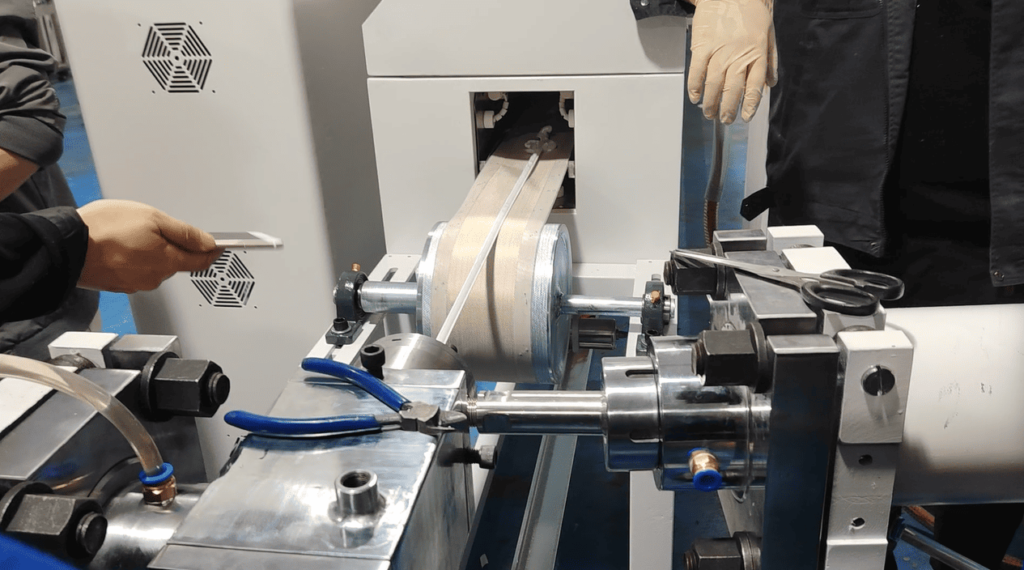
How do you know if your strip is really IP68? You cannot just look at it. You need a rigorous testing hardware process. After the LED silicone strip extrusion machine finishes the job, the strips must go through a series of tests. We use a vacuum chamber to check for air leaks. Then we use a high-pressure water tank. We leave the strips underwater for 48 hours or more. If the weight of the strip increases even by one gram, it means water is getting in.
I want to dive deeper into the testing protocols for 2026. The most important test is the “thermal shock” test. We put the strip in boiling water, and then we immediately put it in ice water. This makes the silicone expand and contract very fast. If the co-extrusion bond is weak, it will fail here. A professional LED silicone strip extrusion machine produces strips that can pass this test 100 times. We also check the “light decay” after the water test. Sometimes water doesn’t break the light, but it makes it dimmer. This is because moisture is reacting with the phosphorus in the LED. We use a photometer to measure the lumens before and after. This is the level of detail that high-end clients expect. I stay on-site for 14 days to show your QC team how to perform these tests correctly. I help you set up a testing lab in your factory. I believe that a factory is only as good as its testing room. If you don’t test, you don’t know your quality. And in 2026, “I think it is good” is not enough. You must have data. When I play basketball, the scoreboard doesn’t lie. In the factory, the pressure gauge doesn’t lie. If the gauge says the strip is leaking, you fix the machine. I provide the tools and the knowledge to make sure your scoreboard always shows a win. Our advanced extrusion technology includes these testing suggestions in the machine proposal. We want you to be a leader in the global market.
Conclusion: Making IP68 a Standard, Not a Goal
In conclusion, achieving a real IP68 rating is about hardware and process. You cannot do it with cheap machines or manual labor. The LED silicone strip extrusion machine is the heart of your waterproof strategy. By using co-extrusion, you create a solid, molecularly bonded product that water cannot penetrate. You protect your LED PCB from pressure, heat, and moisture. This is how you build a premium brand in 2026. This is how you sell to the best architectural projects in the world.
I am Eason, and I am here to help you make this transition. I know the technical hurdles because I have solved them many times before. I have helped factories in Russia, Poland, and Saudi Arabia move from “maybe waterproof” to “guaranteed IP68.” I will come to your factory. I will train your people. I will stay for 14 days to make sure your production is perfect. I love my work because I see my clients succeed. I see them win big contracts and grow their teams. I want your factory to be a productive force that creates the highest quality lighting in the world. Let’s build something that even a Saudi Arabian storm or a Russian winter cannot break. Contact me today, and let’s start your journey to perfect waterproofing.
IP68 silicone extrusion, LED silicone strip extrusion machine, co-extrusion technology, 1615 waterproof neon flex, 1212 silicone strip, waterproof LED production, silicone molecular bonding, 2026 lighting trends, high-precision extrusion mold, silicone strip waterproofing.
- Tracking Machine for Silicon Extrusion: How to Ensure Stable Process Parameters
- Hiring the Perfect Extrusion Engineer in 2026: A Blueprint for Your LED Silicone Production Line
- Mastering the Factory Acceptance Test: A Live Guide to Silicone LED Strip Machine Commissioning
- Zero Waste Strategy: How to Reuse Tail Materials in Silicone LED Strip Extrusion
- Passing the Torch: Teaching Silicone LED Strip Extrusion Training to the Next Generation