
My name is Eason. I am a skilled LED strip light extrusion machine sales engineer. I have worked in this industry for more than 7 years. I have two sons who love to play with the LED samples I bring home. They try to pull the silicone off the strips. This is actually a great way to see if the material bond is strong. In my free time, I like hiking. I have many times hiked snow mountains. These mountains are very cold. You must check every tool before you climb. I also like desert hiking. The desert is very dry and hot. It teaches me about the endurance of materials under extreme heat. In February 2026, I brought my wife and two sons for a cycling trip around the island of Hainan. We spent days on our bikes. It was a great way to see how different environments affect products. I also like to play basketball. I enjoy the teamwork on the court. It reminds me of how a business team should work together to solve a manufacture problem. I visit different factories every month. I have experience in creating products. I know well about the CNC process and the hardware process. I also understand surface treatment techniques. I can solve any problems from manufacture to your factory. My career story has taken me to many places. I have been to Saudi Arabia, Russia, Vietnam, the Philippines, Malaysia, Cambodia, and India for on-site installation training. I have plenty of experience in this industry.
Today, I want to talk about the primer adhesion test. This is a very important test in our workshop. When we make silicone LED strips, we use a primer. The primer is a special glue. it helps the silicone stick to the internal LED tape or the plastic base. If the adhesion is bad, the silicone will peel off. This is a common manufacture problem. In my latest video, I show how we check this bond. We want a “destructive bond.” This means the silicone should break before it peels away from the base. This ensures high surface quality and long life for the product.
Why the Primer Adhesion Test is Essential for Quality Control
The primer adhesion test is the only way to be sure about your product life. Silicone is a very stable material, but it does not like to stick to things naturally. We must use a chemical surface treatment technique. The primer creates a bridge between the silicone and the other materials. If this bridge is weak, the product will fail in the field. I learned this importance while providing on-site installation training in the Philippines. The humidity there is very high. High humidity can interfere with the primer drying process. If the workers are not careful, the whole batch of LED strips will have peeling issues. We performed many adhesion tests to find the right drying time.
When the silicone peels, it allows water and dust to get inside. This ruins the uniform optical properties of the LED strip. It can also cause a short circuit. My experience in creating products tells me that the cost of a failed product is much higher than the cost of a test. I always insist that my business team performs a primer adhesion test for every new batch of material. We use 1615 and 1212 profiles for high-end projects. These projects require a 5-year or 10-year warranty. Without a successful primer adhesion test, we cannot give that warranty. It is a matter of professional international business practice.
Understanding the Chemistry of the Hardware Process
The hardware process of applying primer is very precise. We use an automated silicone extrusion line. This line has a station that sprays or wipes the primer onto the substrate. The thickness of the primer layer must be very thin. If it is too thick, it will not dry correctly. If it is too thin, it will not cover the surface. I know well about the hardware process because I help design these machines. I use my CNC process knowledge to make sure the nozzles are positioned perfectly. In Russia, we had to adjust the primer station because the factory was very cold. The primer became too thick to spray. We added a small heater to keep the flow steady.
Stable process parameters are the key to a good bond. The temperature and the speed of the line must be constant. If the line goes too fast, the primer does not have time to react with the surface. The primer adhesion test helps us find the “sweet spot” for speed. In Vietnam, we spent three days testing different speeds. We used the primer adhesion test as our guide. Once we found the speed that gave us a destructive bond, we locked the settings. This is the kind of manufacture problem solving I do for my clients. I don’t just sell the machine. I make sure the chemistry and the hardware work together.
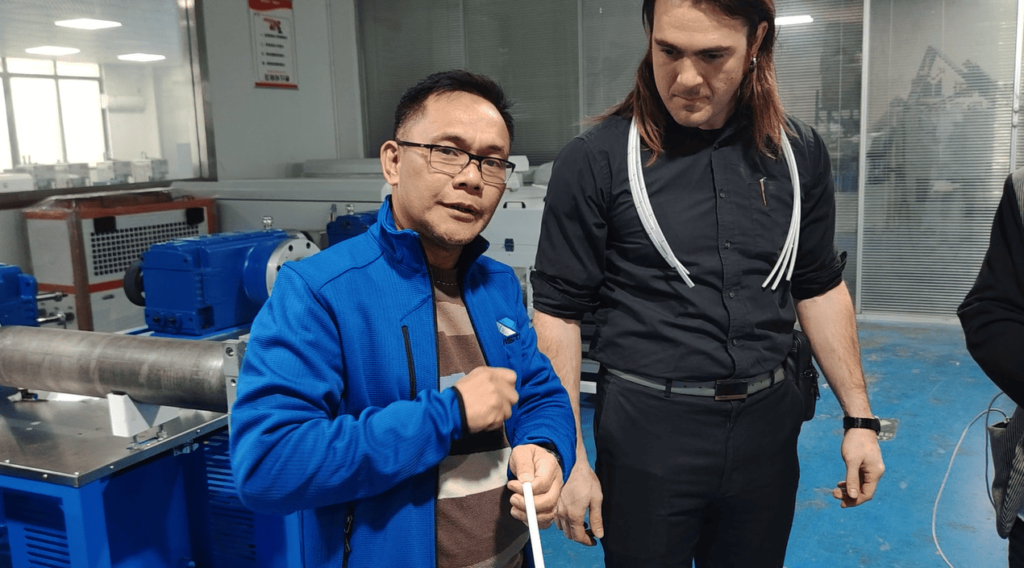
Solving Manufacture Problems with Better Surface Treatment
Surface treatment technique is a deep science. Different materials need different primers. For example, a 1615 profile made of PVC needs a different primer than one made of aluminum. I use my plenty of experience in this industry to help clients choose the right chemicals. I visit different factories and see many mistakes. The most common mistake is using the wrong primer for the material. They think one primer works for everything. This is not true. I showed a client in Malaysia that their silicone was peeling because of this. We changed the primer and performed a new primer adhesion test. The results were perfect.
I enjoy the teamwork when we solve these problems. It is like a basketball game where we pass the ideas around. The production manager, the chemist, and I all work together. We look at the surface under a microscope. We check for oil or dust. Cleaning the surface is also a part of the surface treatment technique. If there is oil from the CNC process, the primer will fail. I teach the factory workers how to clean the parts properly during my on-site installation training. We make it a standard part of their international business practice. This attention to detail is what makes a great product.
Analyzing the Results of a Destructive Adhesion Test
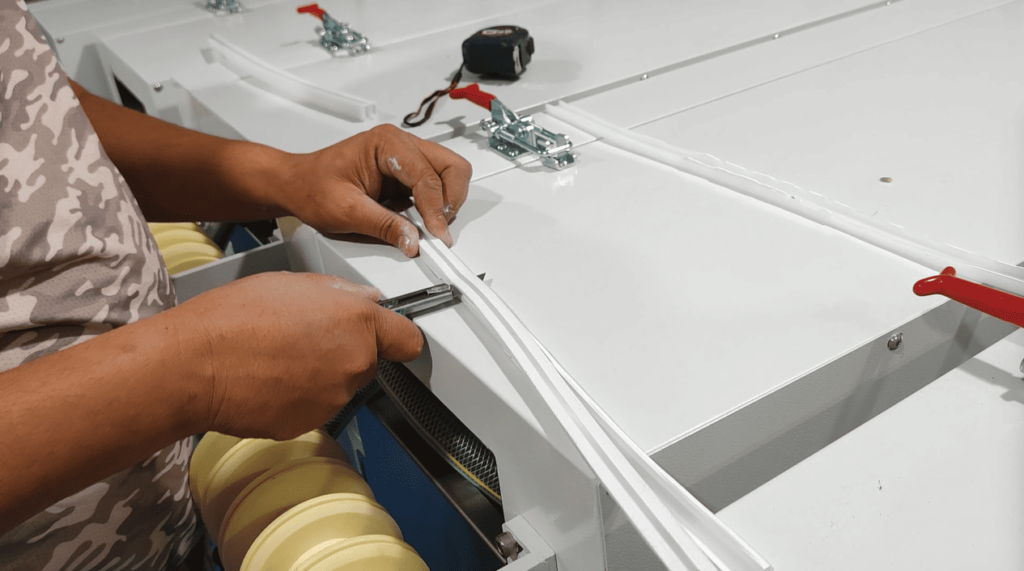
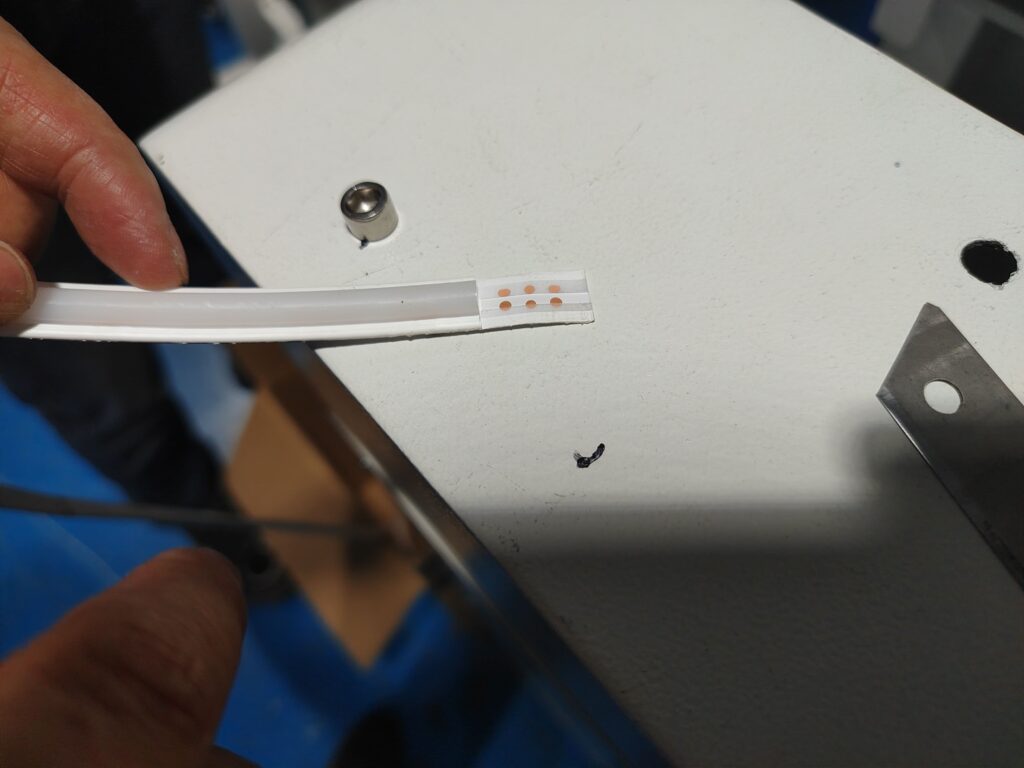
When we perform a primer adhesion test, we want to see the silicone tear. If the silicone pulls away cleanly, the test is a failure. We call this “interfacial failure.” It means the primer did not bond to the surface or the silicone. In my video, you can see me using a pair of pliers. I pull the silicone back slowly. I look at the contact point. If I see bits of silicone left on the base, that is a good sign. It means the bond is stronger than the silicone itself. This is what we call a “cohesive failure” in academic writing. For my clients, I just call it a “strong bond.”
I think about my hiking trips to snow mountains. You need your boots to have a strong grip on the ice. If the rubber peels off your boot, you will fall. The silicone on an LED strip is like the rubber on your boot. It must stay attached no matter what. In Saudi Arabia, the sun is very strong. The UV rays can attack the primer bond. We performed a primer adhesion test after putting the samples in a UV chamber for 100 hours. The bond stayed strong. This gave the client confidence to use our machines for outdoor projects. I use my experience in the industry to prove that our hardware process can handle any environment.
Maintaining Stable Process Parameters for Mass Production
A successful primer adhesion test in the lab is just the start. The challenge is to keep that quality in mass production. This requires stable process parameters every day. I help my clients set up monitoring systems. We check the primer flow and the drying oven temperature every hour. If the temperature drops, the primer will not cure. This will lead to a failed primer adhesion test later. I have seen this happen in India. The power was not stable, and the oven temperature was jumping around. We installed a voltage stabilizer and the problem was solved.
My interest in economics helps me explain why this matters to the boss. A failed batch of 5,000 meters is a huge loss. It is much cheaper to have a stable hardware process. I use my career story to share these lessons. I tell them about the mistakes I have seen in other countries. This helps them avoid the same manufacture problem. I know well about international business practice. I know that time is money. A stable line produces more profit. I use my knowledge of the industry to make sure every client reaches their production goals.
The Impact of Environmental Factors on Adhesion
Environment plays a big role in the primer adhesion test. Cold, heat, and humidity all change how the primer works. When I cycled around Hainan, I felt the salty air and the high heat. I thought about how this would affect an LED factory. The salt can cause corrosion on the hardware. The heat can make the primer dry too fast. I use my experience from visiting different factories to prepare for these factors. In Cambodia, we had to install an air conditioner in the primer room. It was the only way to get a consistent primer adhesion test result.
I also like reading about material science. I read about how water molecules can crawl under the primer layer. This is called “wicking.” To stop this, we need a very high-quality surface treatment technique. We use plasma cleaning sometimes before the primer. This makes the surface very active for bonding. I show my clients how to use these advanced tools. I can solve any problems from manufacture to your factory. I have seen it all in my 7 years. I bring this global knowledge to every on-site installation training session.
Improving Uniform Optical Properties through Better Bonding
You might wonder how a primer adhesion test affects the light. If the silicone peels away, it creates a gap. This gap changes how the light travels through the silicone. It ruins the uniform optical properties. You will see shadows or bright spots. For a 1212 profile used in a luxury hotel, this is not acceptable. The light must be perfectly smooth. A strong bond ensures that the silicone stays in the exact right place. It maintains the optical path designed by the engineers.
I take my two sons to see beautiful lighting projects in the city. I show them how the light is smooth and soft. I tell them that it is smooth because the silicone is stuck tight to the LEDs. I want to be proud of the products my machines make. This is why I focus so much on the primer adhesion test. It is a small detail, but it has a big impact on the final look. I use my experience in creating products to ensure that every LED strip is a piece of art. High surface quality is the result of many small, perfect steps.
Designing New Products with Adhesion in Mind
When I am creating products, I think about the primer adhesion test from the start. We choose materials that we know bond well. We design the hardware process to include cleaning and priming stations. I work with the CNC process team to make sure the surfaces are not too smooth. A little bit of roughness can actually help the primer stick better. It is like the grip on a basketball. If the ball is too smooth, you can’t control it. If the LED strip base is too smooth, the silicone can’t “grab” it.
I enjoy the thinking part of working for a business team. We look at the 1615 profile and find ways to make it better. We might add a small groove for the primer to sit in. This is a clever hardware process change. It makes the primer adhesion test even more successful. I use my 7 years of industry experience to guide these designs. I have seen what fails and what works. I bring this “know-how” to every project. I can solve any problems before the machine even leaves our factory.
Training Global Teams on Professional Testing Protocols
On-site installation training is the most effective way to share my knowledge. I go to Malaysia, Vietnam, and Saudi Arabia to teach the local teams. We perform the primer adhesion test together. I show them how to record the data. I show them how to look for the “destructive bond.” This creates a culture of quality in the factory. They start to take pride in their work. They realize that a successful primer adhesion test is a sign of a professional team.
I like to visit different factories because every team is different. Some are very fast, and some are very careful. I adapt my teaching style to match. I use my international business practice to communicate clearly. I am not just an engineer; I am a partner in their success. My career story is full of these training sessions. Each one is a chance to make the industry better. I have plenty of experience in this. I know how to make a complex test easy to understand. This is the value I bring to your factory.
The Future of Adhesion Technology in Silicone Extrusion
The future of silicone LED strips is very bright. We are seeing new primers that are more environmentally friendly. We are seeing automated silicone extrusion lines that use AI to check the bond. I keep reading and learning to stay at the front of these trends. I am interested in how economics will drive more automation. A robot can perform a primer adhesion test every ten minutes without getting tired. This will lead to even higher surface quality and fewer manufacture problems.
I want my two sons to grow up in a world where things are made well. I want them to see that engineering is about solving problems and helping people. Whether I am hiking a snow mountain or fixing a machine in India, I am focused on the goal. I want to reach the peak of quality. The primer adhesion test is one of the tools that helps me get there. It is a simple test with a very important job. It ensures that our LED strips are the best in the world.
Conclusion
The primer adhesion test is a critical step in the manufacturing of high-quality silicone LED strips. It ensures that the chemical bond between the silicone and the substrate is strong and durable. By performing this test, we avoid common manufacture problems like peeling and light leakage. This leads to products with high surface quality and uniform optical properties. My 7 years of experience in this industry has taught me that there are no shortcuts to quality. From the snow mountains of my hiking trips to the workshops of my clients in Saudi Arabia and Vietnam, the principle remains the same. You must test and verify every step of the hardware process.
I am Eason. I am here to help you solve any problems from manufacture to your factory. Whether you need an automated silicone extrusion system or professional on-site installation training, I have the experience to support you. My business team is dedicated to providing the best “know-how” in the industry. Let’s work together to make your production line more efficient and your products more reliable. The primer adhesion test is just one of the many ways we ensure your success. I look forward to visiting your factory and helping you achieve greatness.
- Tracking Machine for Silicon Extrusion: How to Ensure Stable Process Parameters
- Hiring the Perfect Extrusion Engineer in 2026: A Blueprint for Your LED Silicone Production Line
- Mastering the Factory Acceptance Test: A Live Guide to Silicone LED Strip Machine Commissioning
- Zero Waste Strategy: How to Reuse Tail Materials in Silicone LED Strip Extrusion
- Passing the Torch: Teaching Silicone LED Strip Extrusion Training to the Next Generation