I am Eason. I am back in my workshop today. It is 2026. Outside, the air is crisp. My two sons are in the garden. They are trying to pull a long string through a plastic pipe to build a “telephone.” They are struggling. The string keeps getting stuck. The younger one is frustrated. He is pulling too hard. I went out and showed them a trick. I told them that you cannot just use force. You have to use the right hardware and a little bit of science. This is exactly what I tell my clients in Poland and Saudi Arabia. In my last post, I told you why silicone sleeves are the future. But many of you asked me a follow-up question. “Eason, once I have the 50-meter sleeve from my LED silicone strip extrusion machine, how do I get the LED strip inside quickly?” This is the “assembly hurdle.” If you produce 5,000 meters of sleeve but it takes ten people to pull the LEDs through, you are losing your profit.
I love playing basketball. To win, you need a good pass. You don’t just throw the ball. You aim. You use the right spin. Threading an LED strip into a 1615 or 1212 silicone sleeve is the same. It is about a smooth pass. In 2026, manual pulling is a thing of the past. It is too slow. It breaks the solder joints. It wastes labor. Today, I want to talk about the hardware and the process of LED insertion. This is the second half of the silicone revolution. If the LED silicone strip extrusion machine is the heart, the assembly system is the muscle. Let’s look at how to make your factory truly efficient.
1. The Friction Enemy: Why Silicone is Hard to Thread
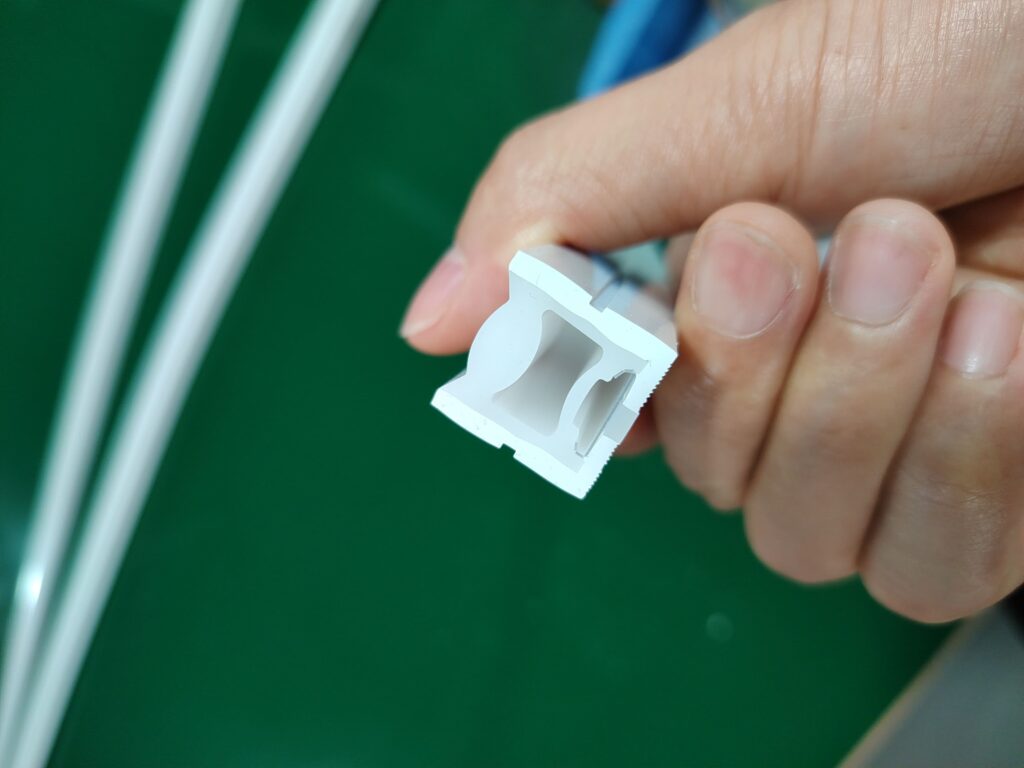
The first thing to understand is physics. Silicone is a high-friction material. It is “grippy.” When you try to slide a copper PCB inside a 1010 or 1212 silicone sleeve, it wants to stick. This friction increases with every meter. By the time you reach 10 meters, the resistance is so high that the PCB might tear. This is the number one reason why factories fail when they switch to hollow profiles. They have the best LED silicone strip extrusion machine, but they cannot finish the product.
I want to dive deeper into the science of silicone friction and how it affects your production. Silicone has a very high “coefficient of friction.” This means it likes to hold onto other surfaces. When the PCB enters the sleeve, it touches the inner walls. Even if the walls look smooth, they are not perfect at a microscopic level. The sharp edges of the SMD or COB components act like tiny anchors. They catch on the silicone. As you pull, the tension builds up. This tension can stretch the PCB. In 2026, we are using very thin 2-ounce or 3-ounce copper PCBs. They are flexible, but they are not made to be pulled with 50 pounds of force. If you pull too hard, you create “micro-cracks” in the solder. The light might work today, but in three months, it will fail. This is a hidden quality cost. To solve this, you need a two-part strategy. First, your LED silicone strip extrusion machine must produce a sleeve with a “low-friction” inner track. We do this by using a special mold design that creates a textured or ribbed inner surface. This reduces the contact area between the PCB and the silicone. Second, you must use a lubricant. I always recommend medical-grade talcum powder or a very thin silicone-based mist. This mist creates a “sliding layer.” It turns a hard job into an easy one. When I play basketball, I wear moisture-wicking socks to prevent friction between my foot and my shoe. The lubricant is the “sock” for your LED strip. It protects the hardware and ensures the assembly speed stays high.
2. Moving to Semi-Automatic LED Threading Machines
In 2026, labor is your biggest expense. You cannot have four workers pulling a string. You need a semi-automatic threading machine. This machine works alongside your LED silicone strip extrusion machine. It uses a high-torque motor and a set of soft rubber rollers to push the LED strip through the sleeve. This is much faster and much safer than human hands.
I want to dive deeper into the hardware of the threading machine. A professional threading machine uses a “tension sensor.” This is very important. The machine is smart. It knows exactly how much force it is using. If the LED strip gets stuck, the sensor feels the rise in tension and stops the motor instantly. This prevents the PCB from snapping. In my factory visits in Russia, I saw many “homemade” threading tools. They were just simple motors with no sensors. They broke more strips than they fixed. A real 2026 system uses a synchronized drive. One motor pushes the PCB at the start of the sleeve. Another motor pulls a “fishing line” at the end of the sleeve. They talk to each other through a PLC. This keeps the tension perfectly balanced. The speed can be as high as 15 meters per minute. This means one worker can finish a 50-meter roll of 1615 neon flex in less than five minutes. Think about the profit. If you do this manually, it takes thirty minutes and two people. With the machine, you save 90% of the labor time. Also, the machine can handle the “vacuum-assist” method. This is where we blow air into the sleeve to “inflate” it slightly. This opens up the space and makes the insertion even smoother. As a sales engineer, I always suggest my clients buy the threader and the LED silicone strip extrusion machine together as a package. It is a complete workflow. It is like having a good court and a good ball. You need both to play the game well.
3. Handling Ultra-Long Runs: The 50-Meter Challenge
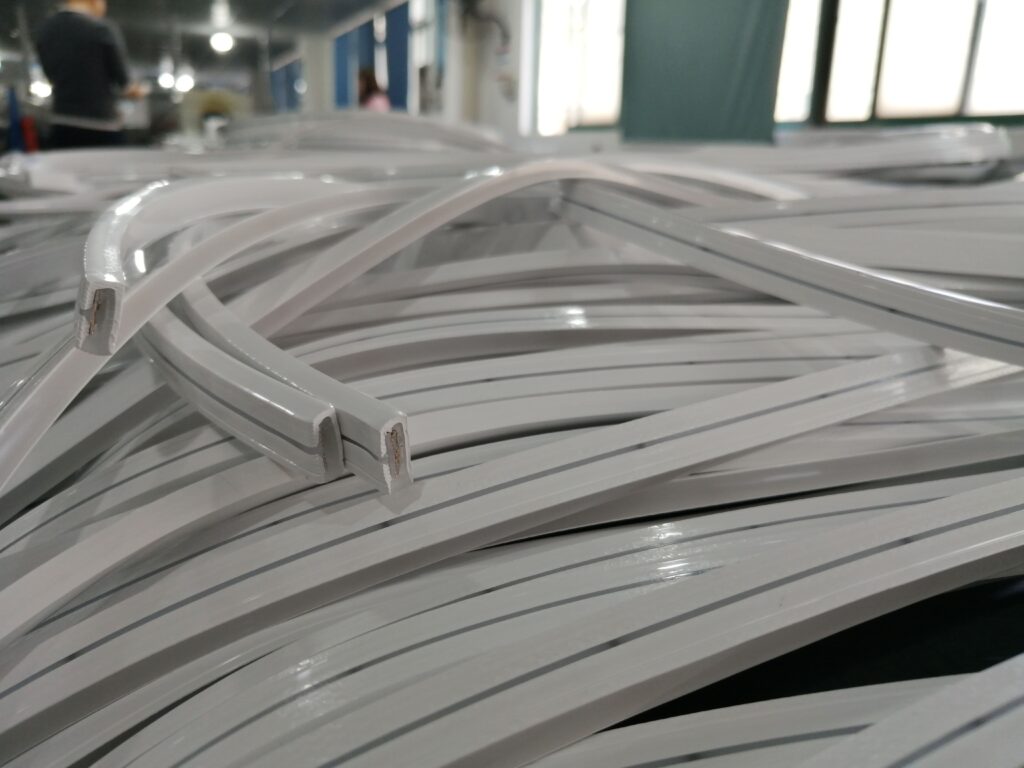
Many customers in the Middle East want ultra-long runs. They want 50 meters or even 100 meters of continuous neon flex with no gaps. This is a huge technical hurdle. If you are making a 50-meter 1212 profile, the friction is your biggest enemy. Manual methods are impossible at this length. You need a specialized hardware process that combines the extruder output with the threading line.
I want to dive deeper into the ultra-long run process. To achieve 50 meters or 100 meters, we use a “continuous flow” method. First, the LED silicone strip extrusion machine produces the hollow sleeve. As the sleeve leaves the water cooling tank and is still a bit warm, it is at its most flexible state. We use a high-pressure air compressor to blow a thin, strong nylon string through the entire 100-meter length. This happens in seconds. Then, we connect that string to our semi-automatic threading machine. The key secret here is the “vibration table.” We place the 100-meter coil of silicone sleeve on a table that vibrates at a very high frequency. This vibration breaks the “static friction” between the silicone and the PCB. It is like shaking a bag of rice to make it settle. The vibration keeps the LED strip moving. It never gets a chance to stick to the walls. In 2026, this is how the top factories in China and Europe are doing it. They don’t just pull; they vibrate and blow air. I often tell my sons that if you want to get a coin out of a piggy bank, you don’t just reach in. You shake it. The vibration table is the “shaking” for your factory. It allows you to produce massive rolls of IP67 neon flex that your competitors cannot match. This gives you a huge advantage in the market. You can charge more for these long-run products because they are hard to make. My job is to make them easy for you. I stay for 14 days to teach your team how to manage these long-run setups. It is about patience and the right hardware settings.
4. Quality Control: Preventing “Twist” and Solder Damage
When you thread an LED strip into a sleeve, there is a risk of “twisting.” If the PCB twists inside the 1615 profile, the light will point in the wrong direction. This looks very bad. You will see dark spots. Also, you must be careful not to damage the diodes. Even a small scratch on the LED surface can change the color temperature. In 2026, quality is everything.
I want to dive deeper into the quality control of the assembly process. To prevent twisting, we use a “guided entry” tool. This is a small CNC-machined funnel that fits into the mouth of the silicone sleeve. It has a flat slot that keeps the PCB perfectly horizontal as it enters. This is a simple piece of hardware, but it is very important. If the PCB enters straight, it stays straight. We also use a “low-friction” coating on the guide. Another thing to watch is the “pulling head.” We don’t just tie a knot in the PCB. We use a soft, plastic “clover” clip that grips the edges of the PCB. This spreads the pulling force across the whole width of the board instead of just one point. This protects the copper traces. In my experience, 50% of “dead-on-arrival” neon flex is caused by bad assembly, not bad extrusion. That is why I focus so much on the assembly stage. I show your workers how to inspect the strip using a “light table” after threading. You turn the strip on while it is on a long glass table. You look for any twists or dark spots. If you find a problem, you can fix it before you put the end caps on. This is the 2026 way of manufacturing. You don’t guess; you verify. I love hiking because I always check my map. I don’t want to walk ten miles in the wrong direction. Your factory should not produce 500 meters of twisted strip. We use the right hardware to make it perfect the first time.

5. The 2026 Goal: Integrated Extrusion and Assembly Lines
The final trend I see for 2026 is the “Integrated Line.” This is where the LED silicone strip extrusion machine and the assembly machine are linked together. This is the ultimate “one-stop” solution. The sleeve is made, cooled, dried, and threaded all in one continuous motion. This reduces the footprint of your factory and cuts your labor costs in half again.
I want to dive deeper into the future of the integrated factory. In an integrated line, the PLC of the LED silicone strip extrusion machine controls everything. The speed of the extruder and the speed of the threader are perfectly matched. This eliminates the need for large storage reels between the two steps. As the sleeve is finished, the “fishing string” is already inside. We use an “online threading” system where the PCB is fed into the sleeve just as it leaves the final cooling stage. This is a very advanced hardware process. It requires very precise timing. If the extruder is too fast, the sleeve will bunch up. If the threader is too fast, the sleeve will stretch. We use laser sensors to monitor the loop between the two machines. This is the “Smart Factory” model. I am currently helping a large client in Saudi Arabia set up this kind of line. They want to produce 10,000 meters of neon flex a day with only two operators. This is only possible with total integration. As a sales engineer, I see that this is where the market is going. The “middlemen” who just make sleeves or just buy strips will disappear. The winners will be the ones who control the whole process. I have the hardware and the software to make this happen for you. I don’t just sell you a machine; I sell you a future. My 14-day on-site training ensures that your team can handle this high level of automation. It is like coaching a basketball team for the playoffs. We work on every move until it is perfect.
Conclusion: Mastering the Full Cycle of Silicone Production
In conclusion, producing a high-quality silicone sleeve is only half the battle. To be successful in 2026, you must master the assembly process. You must understand how to fight friction, how to use semi-automatic hardware, and how to handle long-distance insertion. By using a professional LED silicone strip extrusion machine and a synchronized threading system, you can produce a perfect product every time. You can avoid the “hidden costs” of broken PCBs and high labor waste.
I am Eason, and my goal is to make your factory a powerhouse. I bring my years of experience from the field in Poland, Russia, and beyond to your floor. I know the technical hurdles of silicone because I have lived them. I want to see your 1615 and 1212 profiles glowing in the best projects across the world. Don’t let a “stuck string” stop your business. Use the right tools. Use the right process. I will be there to guide you through every step. I will stay at your factory for 14 days to make sure your team is as fast as the machines. Let’s build an integrated, automated, and highly profitable production line together. Contact me today to discuss your full-cycle silicone production needs and let’s win in 2026.
- Tracking Machine for Silicon Extrusion: How to Ensure Stable Process Parameters
- Hiring the Perfect Extrusion Engineer in 2026: A Blueprint for Your LED Silicone Production Line
- Mastering the Factory Acceptance Test: A Live Guide to Silicone LED Strip Machine Commissioning
- Zero Waste Strategy: How to Reuse Tail Materials in Silicone LED Strip Extrusion
- Passing the Torch: Teaching Silicone LED Strip Extrusion Training to the Next Generation