
My name is Eason. I am a skilled LED strip light extrusion machine sales engineer. I have worked in this industry for more than 7 years. I have two sons. They are growing up fast. I like hiking very much. I have hiked snow mountains and crossed deserts many times. These trips teach me how to stay calm when things get hard. I also like riding. In February 2026, I took my wife and two sons on a cycling trip around the island of Hainan. We had to fix our bikes a few times on the road. This is like working with machines. You must know how to fix things. I also like to play basketball. I enjoy the teamwork. This helps me when I work for my business team. I have an interest in politics and economics. I like reading books to learn about the world. I visit different factories almost every week. I have experience in creating products. I know well about the CNC process, hardware process, and surface treatment techniques. I also know about international business practices. I can solve any problems from manufacture to your factory. My career story includes many travels. I have been to Saudi Arabia, Russia, Vietnam, the Philippines, Malaysia, Cambodia, and India for on-site training. I have plenty of experience in this industry.
Today, I want to share a laser printer operation guide. This guide is for the marking systems we use on LED silicone extrusion lines. Branding is very important for high-end products. If you make a 1615 profile or a 1212 profile, you want your logo to look clean. A laser printer is the best way to do this. It is part of the professional surface treatment technique. In this guide, I will show you how to set up the hardware and the software. I have seen many factories struggle with this. When I was in Vietnam, a client had a messy print. I showed them this operation guide. Now, their products look perfect. Let’s look at the details.
Setting Up the Hardware for the Laser Printer
The first step in this laser printer operation guide is hardware setup. You must mount the laser head on the extrusion line. It should sit after the cooling tank but before the winding machine. This ensures the silicone is stable before printing. I know the hardware process very well. You must make sure the laser head is steady. If it shakes, the print will be blurry. It is like taking a photo while hiking a mountain. You need a steady hand. I use my CNC process knowledge to design strong brackets for the laser. This keeps everything in place.
You also need to adjust the focal length. This is the distance between the laser lens and the silicone surface. Every LED profile has a different height. A 1615 profile is different from a 1212 profile. You must move the laser head up or down to find the sharpest point. I usually use a small ruler for this. In my on-site installation training in Saudi Arabia, I showed the workers how to mark the correct height on the machine frame. This saves time when they change products. A correct focal length is the secret to high surface quality. If the distance is wrong, the laser will burn the silicone or leave no mark at all.
Configuring the Software for Clear Branding
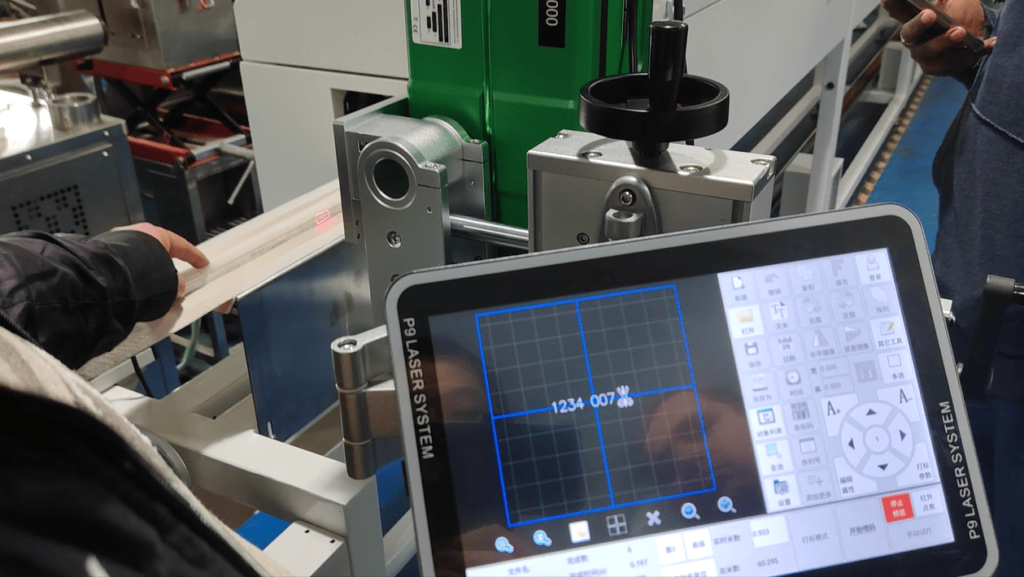
Software is the brain of the laser printer. You must enter your logo, text, and technical specs into the computer. I like to use simple designs. This makes the print easier to read. My interest in reading helps me choose the right fonts. You must set the power and the speed. If the power is too high, the silicone will smell bad. If the speed is too slow, the production line will stop. This is about finding stable process parameters. It is like teamwork in basketball. Everything must move together at the right speed.
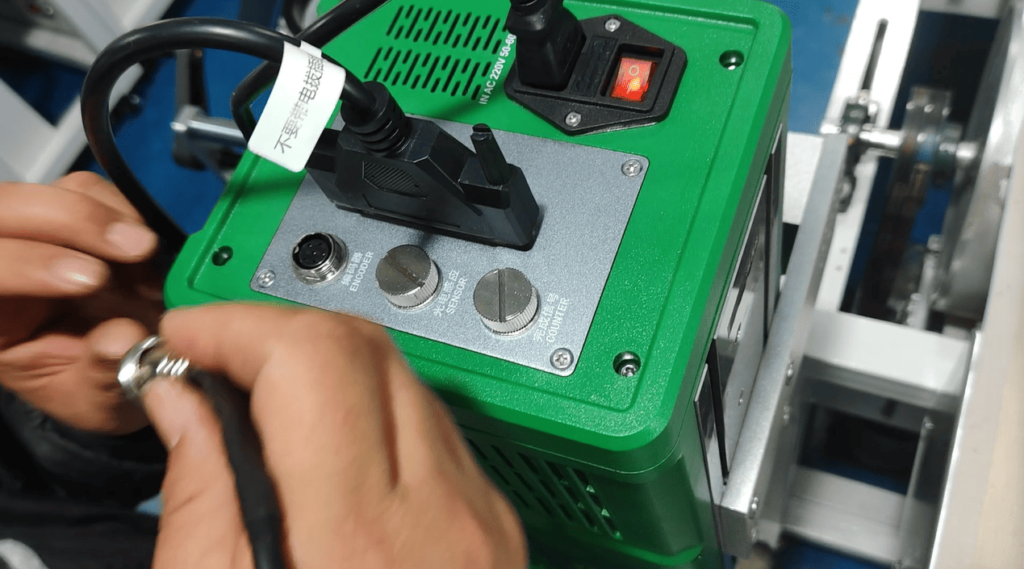
In the software, you also set the “trigger.” This tells the laser when to fire. Usually, we use an encoder on the extrusion line. The encoder tracks the speed of the silicone. This ensures the logo is printed at the exact same distance every time. I have been to many countries like Russia and the Philippines to set this up. Sometimes the encoder is loose. This makes the print jump around. I show the business team how to tighten the hardware. Once the software and hardware work together, the automated silicone extrusion process is truly professional. You can print meters, dates, and your brand name without stopping the machine.
Maintaining High Surface Quality During the Printing Process
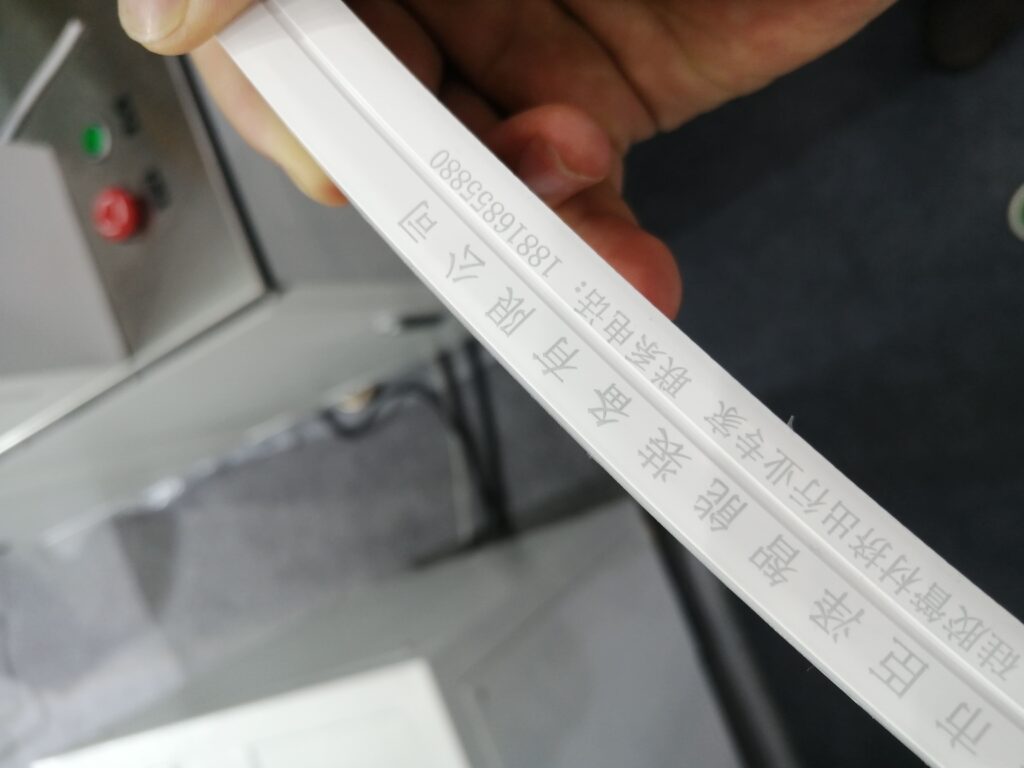
A laser printer is a powerful tool for surface treatment technique. But you must be careful. Silicone is a sensitive material. If you use the wrong settings, you can ruin the surface. I always suggest a test run. Print on a small piece of scrap silicone first. Check the depth of the mark. It should be deep enough to see but not so deep that it weakens the profile. This is part of the “know-how” I share in my career story. I have plenty of experience with different types of silicone. Some silicone is very soft. Some is hard. You must adapt.
In Malaysia, I worked with a factory that made outdoor LED strips. The laser print had to resist the sun and rain. We used a special UV laser for this. It creates a dark mark without burning the material. This keeps the uniform optical properties of the LED strip. If you burn the silicone, the light might leak through the mark. This looks very bad at night. My background in creating products helps me avoid these issues. I look at the result under a microscope. I want to see a clean edge. High surface quality is the mark of a professional manufacturer.
Troubleshooting Common Laser Printer Issues
Even the best machines have problems sometimes. In this laser printer operation guide, I want to talk about troubleshooting. If the print is missing parts, the lens might be dirty. Silicone extrusion can create a little bit of smoke. This smoke sticks to the lens. I always tell my clients to clean the lens every day. Use a soft cloth and some alcohol. It is like cleaning your glasses after a dusty desert hiking trip. You need a clear view to move forward. If the lens is clean and the print is still bad, check the power supply.
Another common problem is the timing. If the logo looks stretched, the encoder is not matching the line speed. I have solved this problem many times in India and Cambodia. You must calibrate the pulses per meter in the software. This is a technical task. But I make it simple for my business team. We use a measuring tape to check the distance. If it is 1 meter on the tape, it should be 1 meter in the software. International business practice is about being accurate. If your mark says “1 meter” but it is only 90 centimeters, your customer will be angry. I can solve any problems from manufacture to your factory.
Integrating the Laser Printer into the Automated Line
The goal of a modern factory is automated silicone extrusion. The laser printer should not slow down the line. It should be a part of the flow. I design the hardware process so the laser works automatically. When the machine starts, the laser starts. When the machine stops, the laser stops. This prevents accidents. I remember a factory where the laser kept firing when the line stopped. It burned a hole through the silicone and the conveyor belt. This was very dangerous. I fixed their wiring to ensure safety.
My experience with the CNC process helps me understand machine logic. We use “if-then” rules. If the line speed is more than zero, then allow the laser to print. This is basic engineering but very important. When I bring my wife and sons riding in Hainan, we follow rules to stay safe. Machines need rules too. A well-integrated laser printer makes the factory more efficient. It reduces labor because no one needs to stamp the product by hand. This improves the economics of the factory. You produce more and spend less. This is what I want for my clients.
The Economics of Laser Marking for Business Teams
Why should a business team spend money on a laser printer? My interest in economics gives me the answer. A laser printer is a one-time cost. It does not use ink. It does not use ribbons. It only uses a little bit of electricity. Compared to inkjet printers, it is much cheaper in the long run. There are no messy spills. There is no waiting for ink to dry. This is very important for high-speed automated silicone extrusion. The product is ready to pack as soon as it leaves the line.
Also, laser marks do not fade. If you use ink on silicone, it might rub off. Silicone is very oily. Most inks do not stick well. A laser changes the surface of the silicone itself. The mark stays forever. This adds value to your brand. Customers in Saudi Arabia and the Philippines appreciate this quality. They know that a laser-marked product is a high-quality product. It shows that the manufacturer has the right “know-how.” I use my knowledge of international business practice to help my clients market their laser-marked profiles. It is a sign of a professional business team.
Solving Manufacture Problems for International Clients
I am lucky to travel the world for my work. In every country, I learn something new. In Vietnam, I learned about high-humidity environments. In Russia, I learned about cold-start problems. I bring all this knowledge to my laser printer operation guide. I don’t just give you a book and leave. I stay with you on-site. I help you set up the hardware. I help you train your operators. I want to solve every manufacture problem before it happens. This is my career story.
When I was in India, a client wanted to print a very complex QR code on a 1212 profile. The profile was very small. We had to use a very fine laser beam. We spent two days testing different power levels. Finally, we got a code that could be scanned by a phone. The client was very happy. This is the kind of teamwork I enjoy. It is like a close basketball game. You keep trying until you win. I bring this energy to your factory. I can solve any problems from manufacture to your factory. I am not just a sales engineer. I am your partner.
Advanced Surface Treatment Techniques with Laser
A laser can do more than just print text. It can create textures. This is an advanced surface treatment technique. Sometimes, we use the laser to make the surface of the silicone matte. This helps to diffuse the light better. It improves the uniform optical properties of the LED profile. I know well about these techniques because I visit different factories all the time. I see how the best companies in the world use technology to stand out. I want to share this with you.
In my reading about economics and politics, I see that innovation is the only way to stay ahead. If everyone is making the same LED strip, you must make something better. A 1615 profile with a custom-etched pattern is a premium product. You can sell it for a higher price. This is how you grow your business team. I use my CNC process experience to help you create these special patterns. We can turn a simple machine into a high-end production line. I am always thinking about how to make your products better. This is my passion.
Whether you are in Saudi Arabia, Russia, or the Philippines, I am ready to provide on-site installation training. I know the hardware process and the CNC process inside and out. I can solve any problems from manufacture to your factory. Let’s work together to make your automated silicone extrusion line the best in the industry. Remember, a professional product starts with professional tools and the right “know-how.” I am here to help you every step of the way. Let’s build a successful future together.
Following this laser printer operation guide will help you create better LED silicone profiles. From setting up the hardware to fine-tuning the software, every step is important. Laser printing is an essential surface treatment technique for modern manufacturing. It ensures clear branding and high surface quality without the mess of ink. I am Eason, and I have spent over 7 years learning these details. My life is a balance of family trips to Hainan, hiking snow mountains, and helping business teams solve manufacturing problems.
- Tracking Machine for Silicon Extrusion: How to Ensure Stable Process Parameters
- Hiring the Perfect Extrusion Engineer in 2026: A Blueprint for Your LED Silicone Production Line
- Mastering the Factory Acceptance Test: A Live Guide to Silicone LED Strip Machine Commissioning
- Zero Waste Strategy: How to Reuse Tail Materials in Silicone LED Strip Extrusion
- Passing the Torch: Teaching Silicone LED Strip Extrusion Training to the Next Generation