I am Eason. I am sitting in my office in China. It is 2026. Outside, the sun is shining on the new solar panels of our factory. This makes me think about my own work. Every day, I talk to business owners from all over the world. They ask me the same big question. “Eason, should I buy my own LED silicone strip extrusion machine, or should I keep buying finished products from a supplier?” This is a hard question. It is like deciding if you should buy a house or keep renting. Buying a house is expensive at the start. But in the long run, it gives you freedom and saves you money. Buying a professional 3-color co-extrusion line is exactly the same. It is a big move for your factory. In 2026, the global market for lighting is changing fast. If you want to stay ahead, you need to control your own production.
I love hiking. When I go to the mountains, I carry a lot of gear. I have a tent. I have a stove. I have a water filter. This gear is heavy. But it means I don’t have to look for a hotel or a shop in the middle of the forest. I am independent. Having an LED silicone strip extrusion machine makes your business independent. You don’t have to wait for a supplier to ship your order. You don’t have to worry if the color is wrong. You make it yourself. You fix the problems yourself. But not every company is ready for this gear. Some companies are too small. Some are in the wrong market. In this article, I will break down everything. I will show you who should invest. I will list the costs for the factory and the workers. I will analyze the competition in the USA, Europe, and the Middle East. This is my honest guide for 2026. I want to help you make a smart choice so you can grow your profit.
1. Who is the Right Match for This Investment?
Before we talk about money, we must talk about your company. Not every lighting company needs an LED silicone strip extrusion machine. If you only sell 100 meters of neon flex a month, do not buy a machine. It will sit in your factory and collect dust. You will lose money. The companies that should invest are the “High-Volume Players.” These are the companies that sell at least 5,000 to 10,000 meters of strip every month. If you are a big wholesaler in Poland or a large contractor in Saudi Arabia, you are a good match. You have the demand. You just need the hardware to fulfill it.
I want to dive deeper into the profile of a successful investor. In my 2026 market visits, I see a clear pattern. The companies that succeed with their own LED silicone strip extrusion machine are those that want “Total Quality Control.” When you buy from a supplier, you are at their mercy. If they use cheap silicone, your product will yellow in a year. If they have a bad day, your 1615 neon flex might have bubbles. By owning the machine, you choose the raw materials. You set the QC standards. This is very important for companies selling to high-end architectural projects in London or Dubai. These projects have strict rules. If your strip fails, you pay a big fine.
Another type of company that fits is the “Innovator.” If you want to create custom shapes or unique 3-color designs that nobody else has, you cannot wait for a supplier to develop them. You need to do it in your own workshop. You can test a new mold in the morning and have a sample ready by the afternoon. This speed is a huge advantage in 2026. Also, companies in regions with high import taxes should invest. In some countries, the tax on finished LED strips is 30% or 40%. But the tax on machines and raw silicone is much lower. By producing locally, you bypass these taxes. You become the most competitive seller in your region. I saw a client in India do this. He stopped importing from China. He bought two of our lines. Now he owns 60% of the local market because his price is better and his delivery is faster. He told me that the machine was the best employee he ever hired. He doesn’t have to pay it a salary, and it never complains about working overtime.
2. The 3-Color Extrusion Line: Factory and Resource Requirements
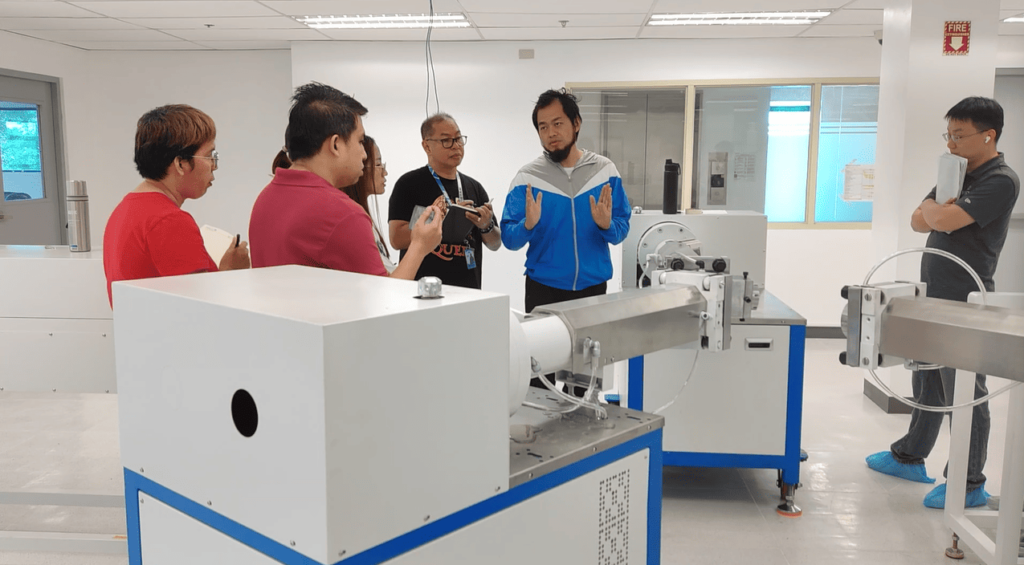
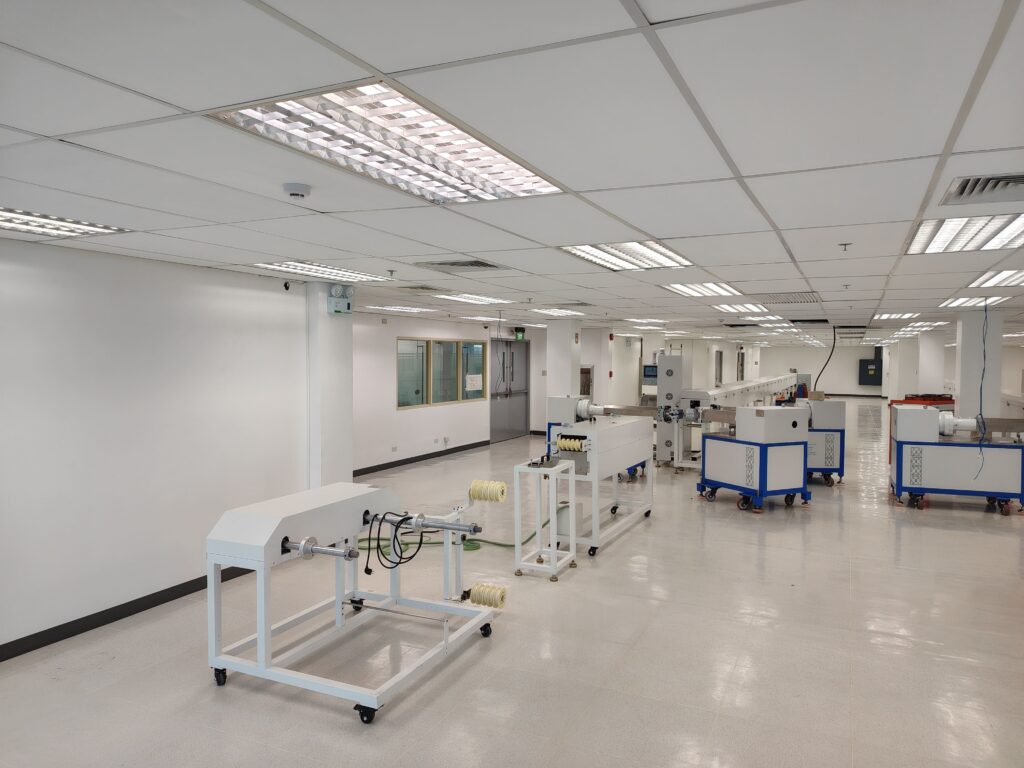
If you decide to invest, you need a plan. A 3-color LED silicone strip extrusion machine is not a small tool. It is a long production line. It needs space. It needs power. It needs a team. I have created a detailed list for you. This is based on a standard professional setup in 2026. You should use this as your checklist.
Factory Resource Configuration List
| Item | Requirement | Details |
|---|---|---|
| Factory Space | 45m (L) x 8m (W) | Total area should be at least 400-500 square meters for production and storage. |
| Worker Count | 2-3 per shift | 1 senior operator for the PLC, 1-2 junior workers for material loading and packing. |
| Power Supply | 120 kW – 150 kW | This is the peak power for heaters, motors, and the vulcanization oven. |
| Compressed Air | 0.6 – 0.8 MPa | Required for the end cap making, air knives, and pneumatic controls. |
| Water Supply | Recirculating System | Used for cooling the extruder barrel and the final cooling tanks. |
| Raw Materials | Silicone & PCB | High-reflectivity base silicone, transparent top silicone, and LED PCB reels. |
I want to dive deeper into the technical logic of this setup. The length of the factory is the most common mistake I see. A professional LED silicone strip extrusion machine is about 30 to 35 meters long. This includes the pay-off, the extruders, the long oven, the cooling zone, and the puller. You also need space at both ends to move the material. If your factory is too short, you have to “bend” the line. This is bad for the product. It creates tension and ruins the shape of the 1212 or 1615 profile. The power requirement is also high because of the vulcanization oven. Silicone needs a lot of heat to cure. In 2026, we use infrared heaters because they are more efficient. But you still need a stable power grid.
Regarding the workers, you don’t need a huge crowd. You need a “Quality Team.” The senior operator is the most important person. He must understand the PLC. He must know how to adjust the pressure of the three different extruders. During my 14-day on-site training, I spend most of my time with this person. I teach him how to “read” the silicone. If the weather is humid, the silicone behaves differently. He must know how to adjust the vacuum degassing to prevent bubbles. The junior workers handle the physical work. They load the 20kg silicone drums. They pack the finished 50-meter rolls. This balance of skill and labor is what keeps your cost low. I tell my sons that a basketball team only needs five players, but they must work as one. Your factory team is the same. If the loader is slow, the extruder waits. If the operator is careless, the packer gets trash. I help you set up this workflow so everything runs like a clock. We also look at the compressed air. Many owners buy a cheap compressor. This is a mistake. If the air pressure fluctuates, the vacuum in the LED silicone strip extrusion machine will fail. You will get bubbles in your strip. You need a professional screw-type compressor with a dryer. This ensures the air is clean and stable for your IP68 production.
3. Maintenance Cost Analysis for One Year
Many people only look at the price of the machine. But you must look at the “Life Cost.” A machine is like a car. You have to change the oil. You have to replace the tires. For an LED silicone strip extrusion machine, maintenance is what keeps your quality high. If you ignore it, your 1212 profile will start to look bad. Your scrap rate will go from 2% to 10%.
Estimated Annual Maintenance Costs (USD)
| Maintenance Category | Estimated Cost | Frequency |
|---|---|---|
| Mold & Die Polishing | $1,500 – $2,500 | Every 3-4 months depending on volume. |
| Heater Band Replacement | $800 – $1,200 | Once a year for high-wear zones. |
| Screw & Barrel Cleaning | $500 – $1,000 | Consumables like cleaning compounds and brushes. |
| Lubrication & Oils | $300 – $500 | Regular greasing of bearings and gearbox oil changes. |
| Sensor & PLC Updates | $1,000 – $2,000 | Calibration of pressure/temp sensors and software tweaks. |
| Total Annual Cost | $4,100 – $7,200 | Approximately 5-8% of the machine value. |
I want to dive deeper into the maintenance logic. The most important cost is the mold. In 2026, we use S136 stainless steel for the extrusion dies. This steel is very hard and smooth. But silicone is abrasive. Over time, it creates tiny scratches inside the mold. These scratches make your neon flex look “dull.” You must polish the mold every few months to keep that “mirror finish.” If you are making 3-color strips, this is even more important. The “fusion zone” where the colors meet must be perfectly sharp. If the mold is worn, the colors will bleed into each other. This is a quality failure.
Another hidden cost is the sensors. An LED silicone strip extrusion machine depends on data. If the temperature sensor in Zone 5 is wrong by 5 degrees, the silicone will not cure correctly. It might stay sticky inside. I recommend calibrating your sensors every six months. It is like checking the air pressure in your basketball. If it is too low, you cannot dribble. If it is too high, it hurts your hand. In the factory, if the sensors are wrong, your profit will drop. Also, don’t forget the heater bands. They run at high temperatures for 24 hours a day. They eventually burn out. It is a good idea to keep a spare set on your shelf. I include a “Starter Maintenance Kit” with every machine I sell. This helps my clients in Poland or Saudi Arabia avoid downtime. When I am hiking, I always have a repair kit for my tent. In the factory, you must have a repair kit for your machine. This $5,000 to $7,000 a year is not an “expense.” It is an insurance policy. It ensures that your $100,000 investment continues to produce $1,000,000 worth of product every year. I see many owners in Russia who try to save this money. Their machines look like junk after two years. My clients who follow the maintenance plan have machines that look new even after five years of 24/7 production.
4. ROI Analysis: The Path to Profit
Now let’s talk about the math. This is what the boss wants to see. ROI means Return on Investment. How long does it take for the machine to pay for itself? In 2026, with the high demand for silicone neon flex, the ROI is usually between 3 and 4 months. This is very fast for industrial hardware.
ROI Calculation Example (Monthly)
| Category | Cost/Profit Detail | Calculation |
|---|---|---|
| Outsourcing Cost | $5.00 per meter | Buying 10,000 meters = $50,000 |
| In-house Production Cost | $0.65 per meter | Producing 10,000 meters = $6,500 |
| Monthly Savings | $4.35 per meter | $50,000 – $6,500 = $43,500 |
| Initial Investment | Machine + Setup | Approx. $80,000 – $120,000 |
| Break-even Point | Total Cost / Savings | ~3 to 4 Months |
I want to dive deeper into the ROI math because there are hidden gains. The $4.35 saving per meter is the “direct” profit. This comes from the difference between the supplier’s price and your raw material. But there are “indirect” gains that are even bigger. First is the “Inventory Cost.” When you buy from a supplier, you often have to buy a full container. This means you have $100,000 of cash sitting in a warehouse as boxes of light. With your own LED silicone strip extrusion machine, you only buy the raw silicone and the PCBs. These take up much less space. You only produce what you sold yesterday. This “Just-In-Time” model frees up your cash. You can use that money to market your brand or hire more sales people.
Second is the “Scrap and Return” gain. Suppliers often send you strips with minor defects. You might not notice until the customer complains. Then you have to pay for shipping and replacement. When you make it yourself, you see the defect immediately on the production line. You stop the machine. You fix the mold. Your scrap stays in your factory. It never reaches the customer. This protects your brand reputation. In 2026, a good reputation is worth more than a low price. I saw a factory owner in Saudi Arabia who was losing 5% of his sales because of quality returns from China. After he bought our LED silicone strip extrusion machine, his returns dropped to almost zero. He told me his customers are now happier because the 1615 neon flex is always the same high quality. He actually raised his price by 10% because people trust him more. This added another $10,000 to his monthly profit. This is why the ROI is often faster than the simple math shows. You aren’t just saving money; you are building a more valuable company. I tell my two sons that it is better to grow your own vegetables than to buy them. They are fresher, cheaper, and you know they are healthy. Your factory should be the same.
5. Global Market Competition Analysis: 2026 Trends
Where should you sell your products? Every region has a different “vibe” in 2026. China is still the center of manufacturing, but other regions are growing fast. You must understand the competition before you start your LED silicone strip extrusion machine.
Regional Market Dynamics 2026
| Region | Competition Level | Market Opportunity | Key Challenges |
|---|---|---|---|
| China | Extreme | High-speed innovation & domestic scale. | Low margins & fierce price wars. |
| USA | Moderate | High demand for premium architectural lighting. | High labor costs & strict safety UL standards. |
| Europe (EU) | Moderate/High | Extreme focus on energy efficiency & repairability. | High energy prices & environmental taxes. |
| Middle East | Low/Moderate | Massive infrastructure & smart city projects. | Extreme heat (needs high-grade silicone). |
| Southeast Asia | Moderate | Emerging manufacturing hub for export. | Fluctuating power grids & logistics. |
| India | High | Massive local demand for residential lighting. | Price sensitivity & local certification (BIS). |
| Russia | Low | Replacement of Western brands with local production. | Import hurdles for specialized electronics. |
I want to dive deeper into the global landscape because this is where you win. In the USA and Europe, the market is moving away from cheap PVC. In 2026, they want “Sustainable Silicone.” They want the 1615 or 1212 strips to last for ten years, not two. If you have an LED silicone strip extrusion machine in these regions, you can win by being “Local.” Customers will pay more to know their lights were made in California or Poland. They want to avoid the long shipping times and the carbon footprint of flying products from Asia. This is a huge chance for local factories to beat the low Chinese prices.
In the Middle East, the opportunity is different. It is about the “Heat Factor.” In Saudi Arabia or the UAE, summer temperatures hit 50 degrees Celsius. PVC turns into yellow jelly in this heat. Only high-grade silicone can survive. If you have a factory in the Middle East, you can specialize in “Desert Grade” neon flex. You can use our LED silicone strip extrusion machine to create extra-thick 3-color profiles that stay cool and bright under the sun. The competition there is still low because most people are still importing. Being the first local producer is a massive advantage. I help my clients in these regions choose the right silicone formulas. We test the strips in “simulated sun” chambers to make sure they pass the test. For the Russian market, the situation is unique. Because many Western brands left, there is a huge gap in the high-end market. Local companies are buying our machines to fill this gap. They are making 1212 profiles for high-end restaurants in Moscow that look exactly like the top European brands. The profit margins there are very high right now. No matter where you are, the key is to find your “special move.” In basketball, some players are good at shooting, and some are good at defense. In the lighting market, some factories win with speed, and some win with extreme quality. My job is to help you find your win.
Conclusion: Is 2026 the Year for Your Move?
In conclusion, investing in an LED silicone strip extrusion machine is a major decision. It requires a significant amount of cash, space, and a dedicated team. But for the right company, it is the bridge to the next level of success. It gives you the power to control your quality, reduce your costs, and react to the market in hours instead of weeks. In the 2026 world of smart cities and high-end architecture, “Made in My Own Factory” is a powerful message.
I am Eason, and I have seen many companies make this transition. I have been in the dusty factories of India and the high-tech workshops of Poland. I know what works and what fails. I don’t just sell you the hardware. I give you the process. I stay with you for 14 days to make sure your first roll of 1615 neon flex is perfect. I help you solve the technical hurdles so you can focus on your customers. I love my work because I love seeing a factory come to life. I want to see your machines running 24/7, making beautiful light for the world. If you are ready to stop renting and start owning your production, I am here to help. Let’s look at your numbers together. Let’s build a profitable future for your business in 2026. Contact me today for a custom ROI analysis and let’s get started.
Keywords: LED silicone strip extrusion machine, factory investment 2026, 3-color co-extrusion line, ROI analysis, silicone extrusion market, 1615 neon flex production, 1212 silicone strip, lighting manufacturing cost, silicone extrusion maintenance, global lighting competition.
- Tracking Machine for Silicon Extrusion: How to Ensure Stable Process Parameters
- Hiring the Perfect Extrusion Engineer in 2026: A Blueprint for Your LED Silicone Production Line
- Mastering the Factory Acceptance Test: A Live Guide to Silicone LED Strip Machine Commissioning
- Zero Waste Strategy: How to Reuse Tail Materials in Silicone LED Strip Extrusion
- Passing the Torch: Teaching Silicone LED Strip Extrusion Training to the Next Generation