
My name is Eason. I am a skilled LED strip light extrusion machine sales engineer. I have worked in this industry for more than 7 years. I have two sons who always ask me why the factory machines are so big. I love reading books about global economics. These books help me understand how international business practice works. I also love physical challenges. I have finished many snow mountain climbs and desert hiking trips. In February 2026, I took my wife and my two sons to ride cycles around the island of Hainan. We spent many days on the road. It was hard work. My sons learned that you must keep moving to reach the goal. This is just like a production line. The material must keep moving to make a good product. I visit different factories every month. I have experience in creating products. I know well about the CNC process and the hardware process. I also understand surface treatment techniques. I have been to Saudi Arabia, Russia, Vietnam, and many other countries for on-site installation training. I can solve any problems from manufacture to your factory.
In this article, I want to show you how to guide silicone from auto-feeder to extruder. You can see the process in my latest video. This step is very important for an automated silicone extrusion line. If the feeding is not smooth, the 1615 or 1212 profile will have defects. Many people think they can just throw the silicone in. But you need the right “know-how” to do it correctly. I will explain the hardware process and how to keep stable process parameters. This will help your business team avoid manufacture problems.
The Importance of Guiding Silicone from Auto-Feeder to Extruder Correctly
When we guide silicone from auto-feeder to extruder, we are creating a bridge. This bridge must be strong and steady. The auto-feeder pushes the refined silicone into the main extruder barrel. If the angle is wrong, the silicone will get stuck. This causes the machine to stop. A stopped machine is a waste of money. In my 7 years of experience, I have seen many factories fail here. They do not pay attention to the feeding path.
I remember a project in Saudi Arabia. The temperature was very high. The silicone became a bit sticky. The workers could not guide the material smoothly. The automated silicone extrusion line kept failing. I stayed with them for two days. I showed them how to adjust the pressure of the auto-feeder. We fixed the path. Then the production became stable. It is like when I am hiking in the desert. You must find the right path. If you take the wrong way, you waste your energy. In the factory, a wrong path for the material wastes your profit. My knowledge of the hardware process helps me see these issues quickly. I want your business team to have the best results.
Setting Up the Auto-Feeder Hardware Process for Success
The hardware process for the auto-feeder must be precise. You must align the feeder nozzle with the extruder inlet. There should be no gap. If there is a gap, air will enter. Air causes bubbles in the silicone LED strip. Bubbles ruin the uniform optical properties. You must also check the internal surface of the feeding pipe. It must be very smooth. We use special surface treatment techniques to make the metal slippery. This helps the silicone slide easily.
In Russia, I worked with a client who had very old equipment. The feeding pipes were rusty. The silicone was moving very slowly. I recommended a new set of pipes with a mirror finish. We installed them together. The material flow improved immediately. It was like a fast pass in a basketball game. I love playing basketball. I know that a clean pass leads to a score. In the factory, a clean material path leads to a high surface quality. My career story is full of these small technical fixes. They make a big difference for the business team. I always share these secrets during on-site installation training.
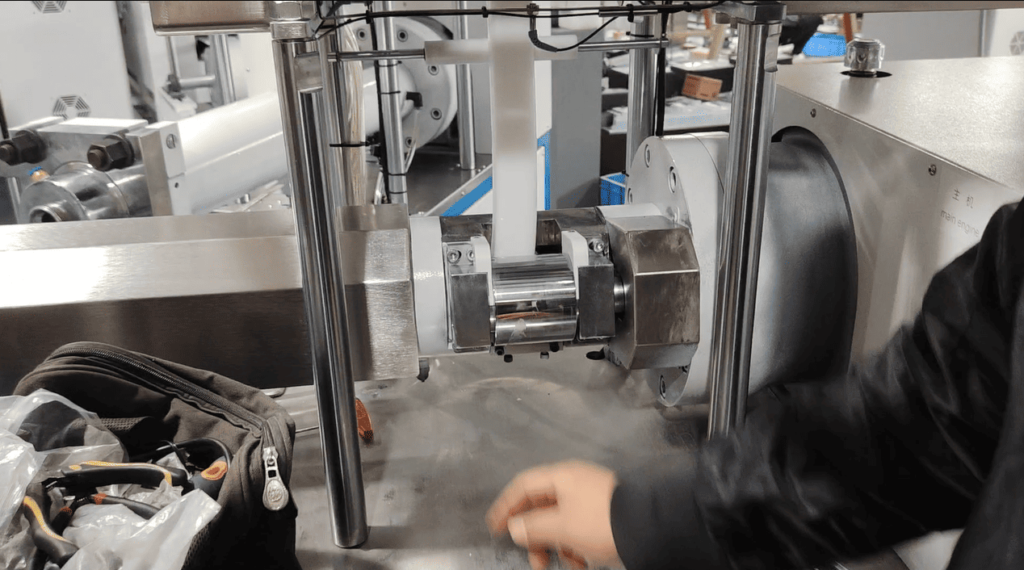
Maintaining Stable Process Parameters During Feeding
To guide silicone from auto-feeder to extruder, you need stable process parameters. This includes the feeding speed and the hydraulic pressure. The speed of the feeder must match the speed of the extruder screw. If the feeder is too fast, the material will overflow. If it is too slow, the extruder will run empty. We use sensors to sync the two machines. This is the beauty of industrial automation.
I think about my cycling trip in Hainan. My wife and I had to keep the same speed to stay together. If I went too fast, she would get tired. If I went too slow, we would never arrive. The feeder and the extruder are a pair. In Vietnam, I helped a business team set up a digital control system. This system kept the parameters stable for 24 hours. The result was a perfect 1615 profile every time. My interest in economics tells me that stability is the key to low costs. I use my plenty of experience in this industry to help you reach that stability. You can solve many manufacture problems by just keeping your parameters consistent.
Troubleshooting Manufacture Problems in the Feeding Zone
Manufacture problems often happen in the feeding zone. The most common problem is material “bridging.” This is when the silicone forms a hard arch inside the feeder. It stops the flow. Another problem is oil leaking from the hydraulic system. You must check the seals every week. If oil gets into the silicone, the light strip will not cure. This ruins the high surface quality.
I have seen these problems in many countries like the Philippines and Malaysia. In India, a client had a major oil leak. It destroyed a whole batch of material. I showed them how to replace the seals and clean the pipes. I also taught them how to listen to the machine. A healthy machine has a specific sound. I learned this by visiting different factories for 7 years. It is like listening to the wind when you are on a snow mountain. You can feel a storm coming. In the factory, you can feel a manufacture problem coming. I want your business team to be proactive. This is part of a professional international business practice.
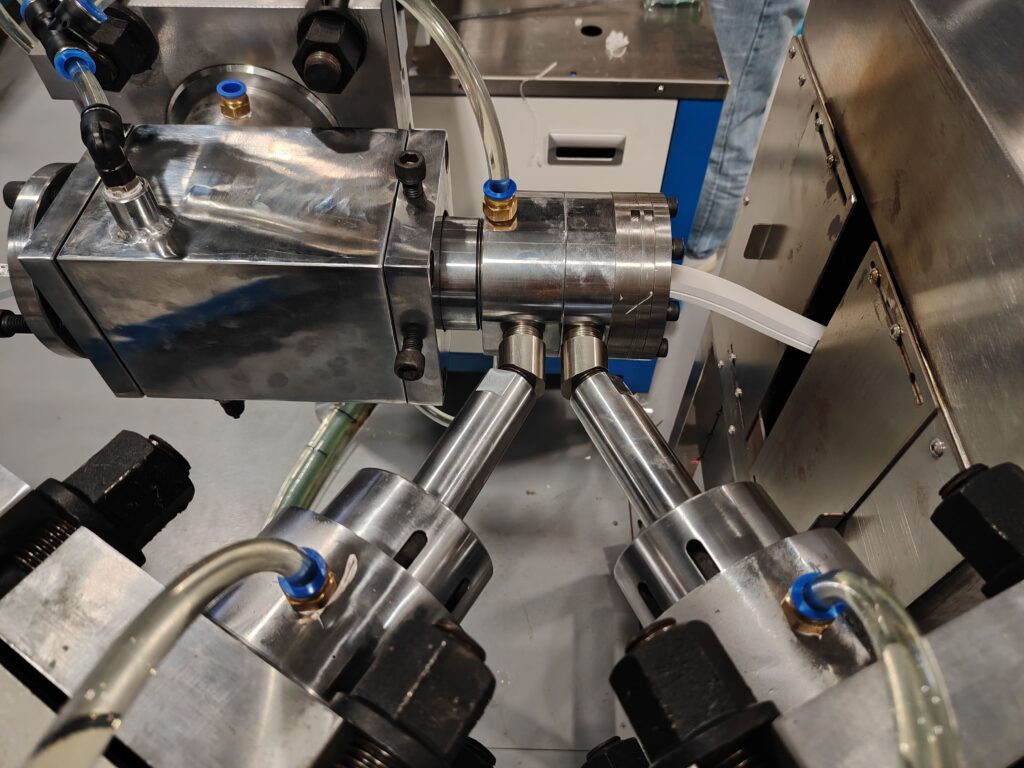
Uniform Optical Properties and Continuous Feeding
Continuous feeding is necessary for uniform optical properties. If the material flow stops for even a second, the light strip will have a mark. This mark is visible when you turn on the LEDs. To guide silicone from auto-feeder to extruder correctly, you must have a backup batch ready. The auto-feeder should never run dry. This requires good communication between the refining team and the extrusion team.
I enjoy the teamwork aspect of a factory. It is just like playing basketball. Everyone has a role. If the person at the refiner is slow, the whole line suffers. In Cambodia, I helped a factory improve their internal communication. We set up a signal light system. When the feeder was 20% empty, the light would turn yellow. The refiner team would then bring the next batch. This simple fix ensured uniform optical properties for their LED strips. My experience in creating products helps me understand these needs. I know well about the hardware process and how to make it work for your business team.
Training the Business Team on the Auto-Feeder Operation
I spend a lot of time on training. I want your business team to be experts. To guide silicone from auto-feeder to extruder, the operator must be very careful. They must know how to clean the nozzle. They must know how to adjust the pressure. During my on-site installation training, I make them do it many times. I want them to feel confident.
I think about my two sons learning to ride their cycles. At first, they were afraid. I held their seats and ran behind them. Now, they can ride very fast. It is the same with factory workers. In Saudi Arabia, the local team was new to silicone extrusion. I stayed on the floor with them. I showed them how to guide the material without making a mess. By the end of the week, they were running the automated silicone extrusion line by themselves. This is the most rewarding part of my career story. I am happy when my clients succeed. I can solve any problems from manufacture to your factory by training your people well.
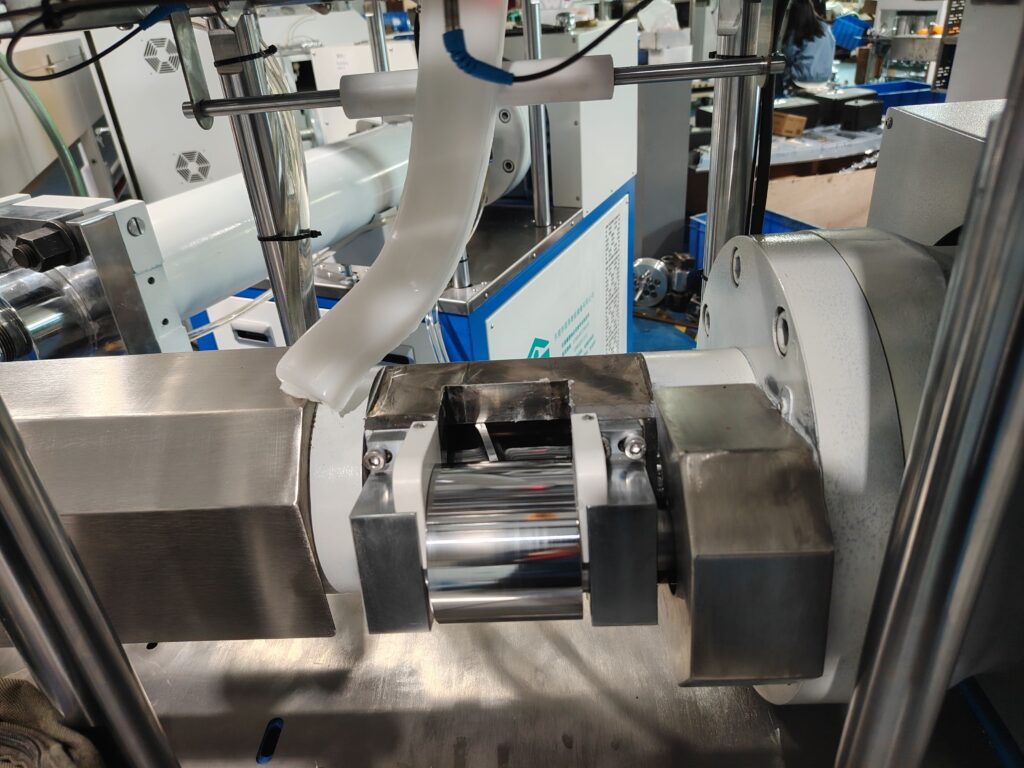
Achieving High Surface Quality through Smooth Material Flow
High surface quality is the goal of every factory. When you guide silicone from auto-feeder to extruder, the material must not be stretched. If it is stretched, it will shrink later. This causes the surface of the 1615 profile to look wavy. The feeding pipe should have a large radius. This prevents the silicone from being squeezed too hard. It keeps the internal structure of the silicone healthy.
My knowledge of surface treatment techniques is very useful here. I help my clients choose the right coatings for their tools. In Russia, we used a special coating on the extruder inlet. This reduced the friction significantly. The silicone flowed like water. The surface quality of the final product was amazing. It looked like a piece of silk. I have plenty of experience in this industry to know these tricks. Whether I am hiking on a snow mountain or working in a factory, I always look for the best way to do things. High surface quality is not luck. It is the result of a good hardware process.
The Role of Economics in Automated Silicone Extrusion
Automation is an economic choice. When you guide silicone from auto-feeder to extruder, you save on labor. You also reduce the chance of human error. This makes your factory more competitive in the global market. I have interest in economics and politics. I see how global trade is changing. Factories must be more efficient to survive.
In my travels to Vietnam and India, I see many factories moving toward automation. I help them calculate the return on investment. A good auto-feeder pays for itself in one year. It allows one operator to manage two lines. This is a big saving. My career story is about helping businesses grow. I use my international business practice knowledge to give the best advice. I want your business team to be profitable. I can solve any problems from manufacture to your factory by looking at the whole picture.
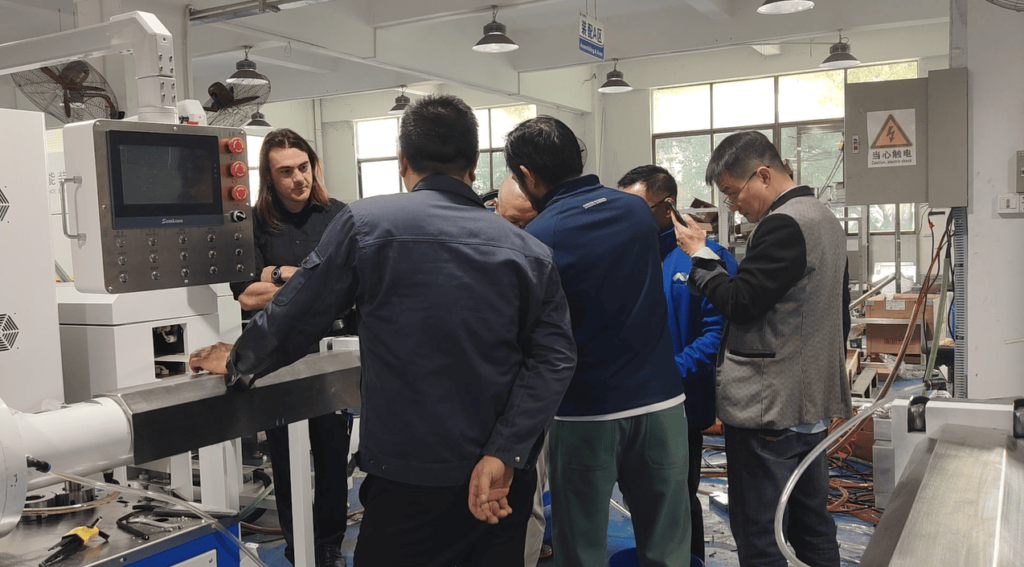
Managing 1615 and 1212 Profiles with One Feeder
Our auto-feeders are very flexible. You can use them for both 1615 and 1212 profiles. To guide silicone from auto-feeder to extruder for different profiles, you only need to change the pressure. A larger profile needs more volume. A smaller profile needs more precision. The machine logic is the same. This flexibility is great for custom orders.
I remember a client in the Philippines. They had many small orders for different shapes. They were worried about changing the setup. I showed them how to use the memory settings on the controller. We saved the parameters for the 1615 profile and the 1212 profile. Switching between them took only five minutes. It was like changing gears on my cycle during the Hainan trip. You must adapt to the road. In the factory, you must adapt to the market. My experience in creating products helps me design these flexible systems. I want your business team to be ready for any challenge.
Professional International Business Practice and Technical Support
When you buy our machines, you get more than just hardware. You get my 7 years of “know-how.” I follow professional international business practice. I provide detailed manuals and video guides. I am always available on WhatsApp to solve manufacture problems. If the problem is big, I will fly to your factory.
I have been to many countries for on-site installation training. I have seen every kind of factory environment. I know how to solve problems in the heat of Saudi Arabia or the cold of Russia. My career story is built on trust. I treat my clients like friends. In February 2026, while I was riding with my family, I even took a call from a client in India. We fixed a feeding issue in ten minutes. I am dedicated to your success. I can solve any problems from manufacture to your factory. Let’s build a great future together.
Conclusion
Guiding silicone from auto-feeder to extruder is a critical technical step in the automated silicone extrusion line. It requires a precise hardware process and stable process parameters to ensure high surface quality and uniform optical properties. Whether you are producing 1615 or 1212 profiles, the “know-how” of material flow is essential. My 7 years of experience and my career story in global markets help me provide the best solutions for your factory. From the snow mountains to the cycling paths of Hainan, I have learned that the right preparation leads to the best results.
I am Eason, and I am here to be your partner in LED manufacturing. I provide on-site installation training and professional technical support. I can solve any problems from manufacture to your factory. Let’s work together to optimize your production and increase your profits. Our business team is ready to support your growth in the international market. Contact me today to learn more about our automated systems and how we can help you achieve excellence. Together, we can light up the world with high-quality silicone products.
- Tracking Machine for Silicon Extrusion: How to Ensure Stable Process Parameters
- Hiring the Perfect Extrusion Engineer in 2026: A Blueprint for Your LED Silicone Production Line
- Mastering the Factory Acceptance Test: A Live Guide to Silicone LED Strip Machine Commissioning
- Zero Waste Strategy: How to Reuse Tail Materials in Silicone LED Strip Extrusion
- Passing the Torch: Teaching Silicone LED Strip Extrusion Training to the Next Generation