
My name is Eason. I am a skilled LED strip light extrusion machine sales engineer. I have worked in this industry for more than 7 years. I have two sons. They often ask me why I travel so much to other countries. I tell them I am helping people build better lights for the world. I love reading books about global markets. This helps me understand international business practice. I also love physical challenges. I have finished many desert hiking trips and snow mountain climbs. In February 2026, I took my family to ride cycles around Hainan island. We spent many hours on the road. We had to check our gear every morning. This is very much like a factory. You must check every detail before you start the machine. I enjoy the teamwork of a production line. It is like a basketball game. Everyone must play their part to win. I know well about the CNC process and surface treatment technique. I have been to Saudi Arabia, Russia, Vietnam, and India for on-site installation training. I can solve any problems from manufacture to your factory.
In this article, I will share the experience of a live observation: witnessing the first meter of silicone LED strip extrusion. You can see this exciting moment in my video. This is the “truth moment” for any automated silicone extrusion line. All the material preparation and hardware process setup lead to this second. If the first meter is good, the next 600 meters will be easy. I will explain how we check for uniform optical properties and high surface quality. This is the “know-how” that makes a professional production line successful.
The Technical Significance of the First Meter in Silicone Extrusion
The first meter of any production run tells the whole story. It shows if the silicone material refining process was done correctly. It shows if the 1615 or 1212 profile mold is clean. When we do a live observation: witnessing the first meter of silicone LED strip extrusion, we look for balance. The silicone must cover the PCB evenly. The surface must be smooth without any bubbles. This is the hardware process at its most critical point. I have seen many people get nervous at this stage.
I remember my first snow mountain climb. The first few steps were the hardest. You have to trust your equipment and your training. In a factory in Saudi Arabia, the workers were very worried about the heat. They thought the silicone would melt before it entered the oven. I stayed with them at the extruder head. We watched the first meter together. It came out perfectly because our stable process parameters were correct. I used my 7 years of experience to calm the team. I showed them that the machine follows the physics, not the weather. This is why on-site installation training is so important. You need a leader who has seen it all before.
Monitoring Stable Process Parameters During the Initial Run
During a live observation: witnessing the first meter of silicone LED strip extrusion, I keep my eyes on the sensors. We check the pressure of the auto-feeder. We check the temperature of the extruder zones. If the pressure jumps, the first meter will be uneven. We want a steady flow. This is how we get a perfect 1615 profile. The hardware process must be silent and smooth. Any noise means there is a problem inside the barrel.
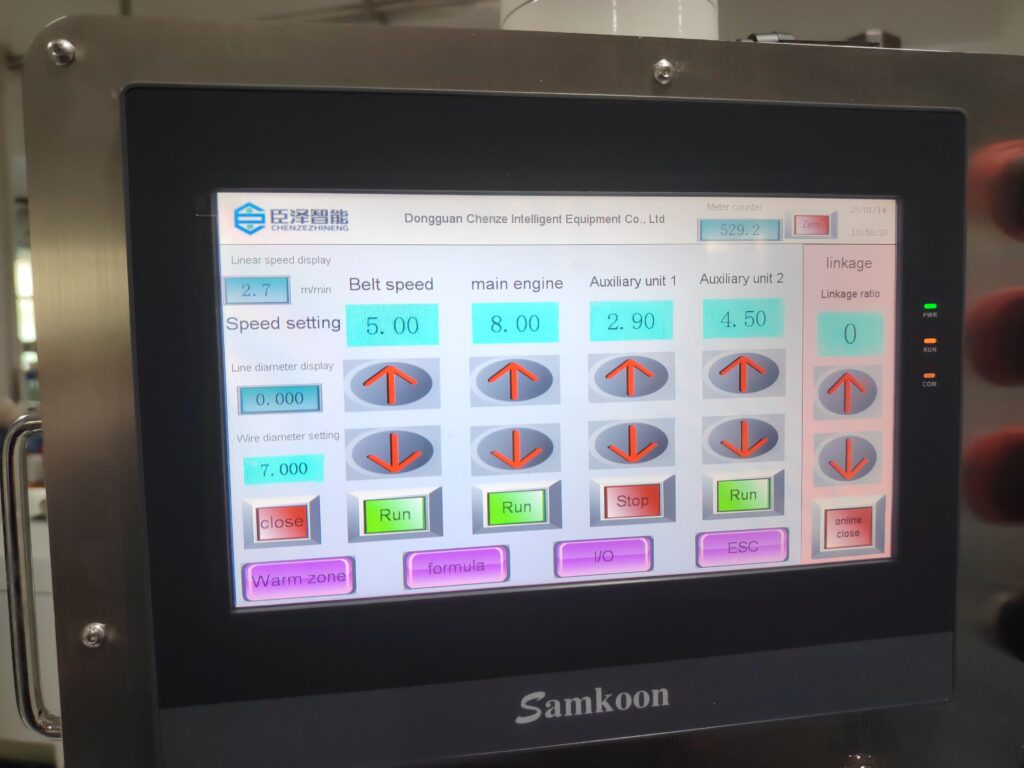
I think about my basketball days. If the team starts with a good rhythm, the whole game goes well. In the factory, the “rhythm” is the speed of the screw and the belt. In Vietnam, I helped a client who had a very fast line. They wanted to reach 600 meters per hour immediately. I told them to slow down for the first meter. We must verify the quality first. We adjusted the belt speed to match the extrusion rate. Once the first meter was stable, we increased the speed together. My knowledge of the CNC process helps me understand how the metal parts react to speed. I bring this professional international business practice to every factory I visit.
Verifying Uniform Optical Properties and Light Consistency
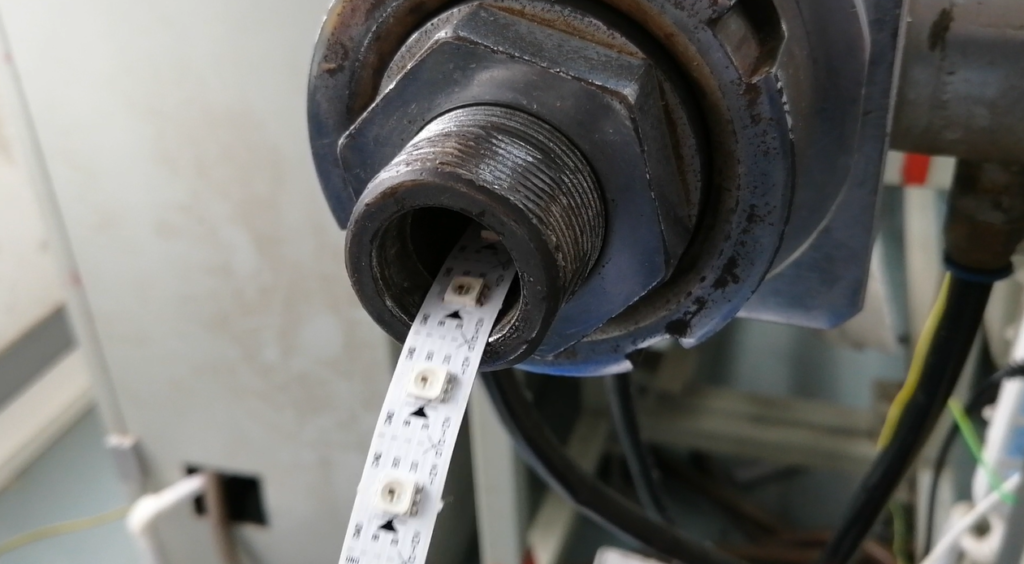
When we do a live observation: witnessing the first meter of silicone LED strip extrusion, we must light it up. We connect the PCB to a power source as it comes out. We look at the light through the silicone. Is it soft? Is the color the same everywhere? This is what we call uniform optical properties. If the silicone is too thin on one side, you will see a bright spot. This is a common manufacture problem. We must adjust the mold position to fix it.
I love reading about economics and how quality affects price. A strip with perfect light can sell for much more. In India, a business team was making strips for a luxury hotel. They needed the light to be 100% consistent. We spent three hours adjusting the hardware process for the first meter. We used a special surface treatment technique on the mold to make the light diffuse better. When we finally turned on the power, the light was like a solid neon tube. The client was very happy. My career story is about reaching these high standards. I have plenty of experience in this industry to help you achieve this level of quality.
Observing High Surface Quality and Mold Performance
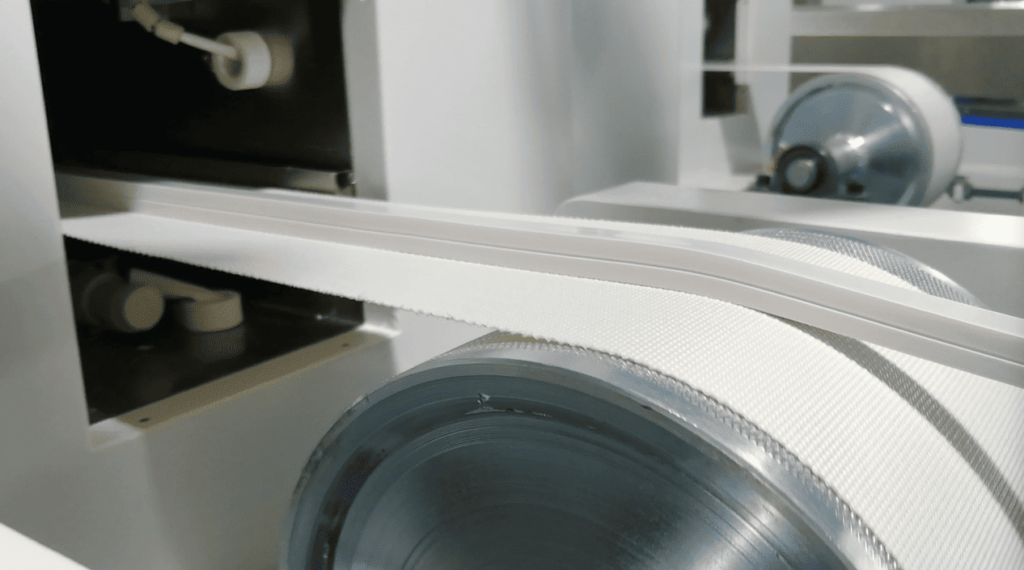
The surface of the 1212 profile must be like silk. During a live observation: witnessing the first meter of silicone LED strip extrusion, I touch the material. It should be firm but smooth. If it feels sticky, the oven is too cold. If it has lines, the mold is scratched. This hardware process requires a sharp eye for detail. High surface quality is the signature of a professional machine. I use my 7 years of “know-how” to judge the finish.
I remember riding my motorcycle in the rain. You must feel the grip of the tires on the road. In the factory, you must feel the quality of the silicone. In the Philippines, we had a problem where the strips looked “cloudy.” We found that the cleaning process after production was not done well the day before. There was old silicone in the mold. We stopped, cleaned everything, and tried again. The first meter was then crystal clear. This is why I teach the business team about the clean process. I can solve any problems from manufacture to your factory by looking at the small signs on the product surface.

The Role of the Tracking Machine in the First Meter
The tracking machine is what pulls the strip into the oven. During a live observation: witnessing the first meter of silicone LED strip extrusion, the tracking must be perfect. If the tracker pulls too hard, the strip stretches. This ruins the 1615 profile shape. If it is too slow, the strip will bend. We must sync the tracker with the extruder screw. This is a key part of the automated silicone extrusion line.
I think about my sons on their cycles in Hainan. They had to keep a steady distance from me. If they went too fast, they got tired. If they were too slow, they fell behind. In the factory, the tracker is the leader of the line. In Malaysia, I trained a team on how to set the tracker tension. We used a digital scale to measure the pull. This is the kind of technical support I provide. My international business practice is to make sure your staff knows every hardware process. When the first meter enters the oven straight, you know the day will be productive.
Troubleshooting Manufacture Problems in Real Time
Things do not always go perfectly during the first meter. That is why we do a live observation: witnessing the first meter of silicone LED strip extrusion. We might see bubbles. This means the silicone material refining process was too fast. We might see the PCB move to the side. This means the tension was too low. We fix these manufacture problems immediately. We do not wait for the end of the day.
I love a good challenge. Climbing a snow mountain is all about solving problems as they happen. You cannot plan for everything, but you can be prepared. In Cambodia, a client had a power dip during the first run. The machine slowed down and the silicone got stuck. I showed the business team how to clear the barrel and restart safely. We adjusted the stable process parameters to handle small power changes. This is the “know-how” that saves your business from loss. My career story is full of these moments where quick thinking saved the day. I have plenty of experience in this industry to help you through any crisis.
Training the Business Team to Observe Quality
My job is to teach your team how to do a live observation: witnessing the first meter of silicone LED strip extrusion. I want every worker to be a quality inspector. I show them how to look for the “glow” of the light and the “feel” of the surface. This is a professional skill. It takes time to learn. I spend 1 to 2 days on this part of the on-site installation training. I want your team to be as skilled as a CNC process engineer.
I treat my clients like my basketball teammates. We are working together for one goal. In a factory in Poland, the workers were very young. They had never seen an automated silicone extrusion line before. I made it into a game. We looked for “hidden” defects in the first meter. They became very good at spotting small issues. This is the value of my international business practice. I build a culture of quality in your factory. I can solve any problems from manufacture to your factory by empowering your people. When the team is skilled, the 600 meters per hour production becomes a reality.
Achieving 600 Meters Per Hour Through Initial Success
The goal of any factory is high production capacity. But you cannot reach 600 meters per hour if the first meter is bad. A live observation: witnessing the first meter of silicone LED strip extrusion is the gate to high speed. Once the quality is confirmed, we gradually increase the speed. We keep the stable process parameters in a safe zone. This is the economic secret of a successful factory. High speed plus high quality equals high profit.
I have interest in economics and I see how global trade works. The most successful factories are the ones that don’t waste time on bad products. In Vietnam, I helped a client double their output in one week. We focused on the first meter every morning. By making the start perfect, they had no waste for the rest of the day. This is the plenty of experience I share with you. My career story is about making machines more than just metal. They are profit-making tools. I use my knowledge of the hardware process to make your business grow.
Consistency Across Different Countries and Climates
I have seen the first meter in many different places. In Saudi Arabia, the air is dry. In Vietnam, it is very humid. But the live observation: witnessing the first meter of silicone LED strip extrusion remains the same technical challenge. You must adapt your silicone material refining process to the local weather. This is a high-level “know-how” that I provide. I bring a global perspective to your local factory.
I think about my desert hiking trips. You must change your plan depending on the sand and the wind. In the factory, you must change your temperatures depending on the room air. In Russia, we had to heat the pipes before the first run. In the Philippines, we had to cool the water more. My international business practice is built on these small adjustments. I can solve any problems from manufacture to your factory because I have seen every climate. I make sure your 1615 profile looks the same whether it is made in Moscow or Mumbai.
The Professional Future of Automated Silicone Extrusion
The technology of extrusion is changing fast. We now have more sensors for the live observation: witnessing the first meter of silicone LED strip extrusion. We can see the pressure and the thickness on a screen. But the human eye is still the best tool. I teach your team to use both the machine and their senses. This is the future of professional industrial automation. I want your factory to be a leader in the industry.
I think about my two sons and the world they will build. I want to give them a world where things are made well. Helping your business team master the hardware process is my contribution. I enjoy the thinking of working for a business team. We are creating something that will light up homes and streets for years. My 7 years of experience are just the beginning. I am always learning and always visiting different factories. I bring the latest surface treatment technique and CNC process news to my clients. Let’s make every first meter a success together.
Conclusion
Live observation: witnessing the first meter of silicone LED strip extrusion is the most important ten minutes of your production day. It is the bridge between a setup machine and a profitable product. By focusing on uniform optical properties, high surface quality, and stable process parameters, you ensure the success of your whole automated silicone extrusion line. My 7 years of experience and my career story from Saudi Arabia to India give me the skills to guide you through this process. Whether I am climbing a snow mountain or training your team, I believe in thorough preparation and sharp observation.
I am Eason, and I am your partner for all your LED manufacturing needs. I provide on-site installation training and solve any manufacture problems. I can solve any problems from manufacture to your factory. Let’s work together to build a professional production line that makes perfect 1615 and 1212 profiles every time. Contact me today to learn more about my training programs and how we can make your first meter a masterpiece. Together, we can create a brighter and more efficient future for the lighting industry.
- Tracking Machine for Silicon Extrusion: How to Ensure Stable Process Parameters
- Hiring the Perfect Extrusion Engineer in 2026: A Blueprint for Your LED Silicone Production Line
- Mastering the Factory Acceptance Test: A Live Guide to Silicone LED Strip Machine Commissioning
- Zero Waste Strategy: How to Reuse Tail Materials in Silicone LED Strip Extrusion
- Passing the Torch: Teaching Silicone LED Strip Extrusion Training to the Next Generation