
Are you tired of your LED neon flex yellowing after just six months? Choosing the wrong silicone supplier can ruin your brand reputation and cause massive financial losses through product returns.
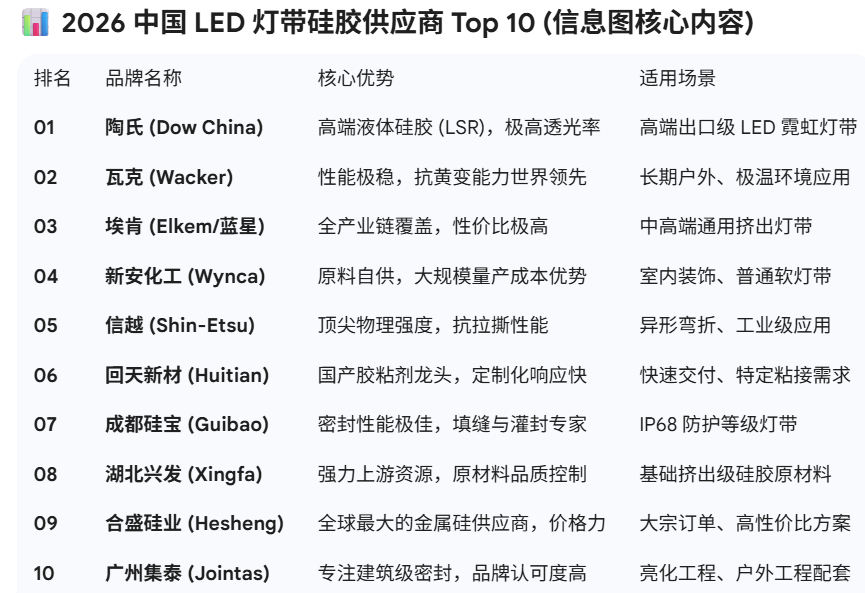
The top 10 silicone suppliers for LED strips in China for 2026 include Dow (China), Wacker (Zhangjiagang), Elkem (Bluestar), Wynca, Shin-Etsu (China), Huitian, Guibao, Hubei Xingfa, Hesheng Silicon, and Guangzhou Jointas. These brands lead in high-transparency, UV-resistant, and extrusion-grade silicone materials for the lighting industry.
Choosing the right material is only half the battle; you also need a machine that can process it with precision. At Silicon Extrusion Tech, I have spent years helping clients match the world’s best silicone materials with our high-speed extrusion lines. My journey as a sales engineer has taken me from the busy streets of Manila to the industrial hubs of Russia, and I’ve seen firsthand how the choice of silicone can make or break a factory. Let me share my professional insights on the industry leaders for 2026 and how they impact your production.
Why Does Your Material Choice Determine Your LED Strip’s Lifespan in 2026?
Poor quality silicone is the “silent killer” of LED strips because it looks perfect on day one but fails when exposed to sunlight and heat. If you use a material with low UV resistance or poor heat dissipation, your LEDs will overheat, lose brightness, and the casing will turn an ugly yellow.
The market in 2026 demands “5-year no-yellowing” guarantees. To meet this, your extrusion process must be synchronized with the material’s specific curing speed and viscosity. I often tell my clients that the machine is the body, but the silicone is the skin. If the skin is poor, the whole product suffers.

The Critical Balance of Chemical Properties
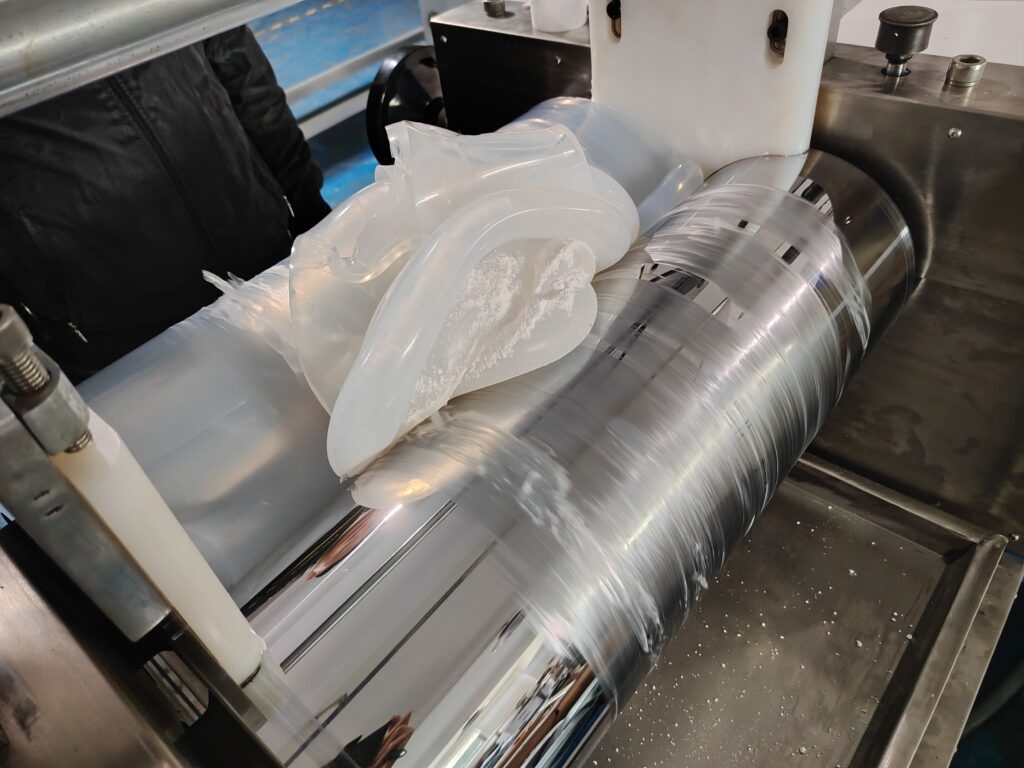
In the world of LED strip extrusion, we mostly deal with High Consistency Rubber (HCR). This material needs to be “refined” on a two-roll mill before it enters the extruder. During my many visits to factories in the Philippines and Vietnam, I’ve seen operators struggle because their silicone was too “sticky” or too “dry.”
If the viscosity is too high, the motor of your extruder works too hard, leading to heat buildup and “scorching” inside the mold. If it’s too low, the LED strip loses its shape before it can fully cure in the oven. This is why I always analyze the TDS (Technical Data Sheet) of the suppliers listed below before setting up a machine for a client. We must look at the Shore A hardness, tensile strength, and especially the vulcanization temperature.
Comparative Analysis: Peroxide vs. Platinum Curing
| Feature | Peroxide Cured Silicone | Platinum Cured Silicone |
|---|---|---|
| Odor | Slight chemical smell | Odorless |
| Transparency | Standard | Crystal Clear |
| Yellowing Resistance | Moderate | Excellent |
| Cost | Lower | Higher |
| 2026 Market Trend | Declining in high-end | Dominating for LED Neon |
Critical Thinking: The Economics of Material Waste
I once worked with an R&D engineer named Shane from the US. He was trying to save 10% on material costs by switching to a local unbranded silicone. Within two weeks, his waste rate jumped from 2% to 15% because the material consistency was so unstable. The “savings” actually cost his company an extra $5,000 in electricity and wasted copper PCB.
My advice to Shane was simple: in the LED industry, “cheap” is often the most expensive path. By using one of the top 10 brands I’ve listed, you ensure batch-to-batch consistency. This consistency allows my extrusion machines to run at a constant speed without the operator needing to adjust the tension or temperature every hour. This is how you achieve true production efficiency.
Who Are the Leading Chinese Silicone Brands for Your 2026 Production?
The landscape of silicone supply has shifted, with Chinese domestic giants now competing head-to-head with global leaders. These companies have invested billions into integrated supply chains, meaning they control everything from the raw silicon metal to the final high-transparency extrusion grade rubber.
By choosing a supplier from this list, you are not just buying a product; you are buying a 2026-ready solution that has been tested for high-speed automated lines. Each of these brands has a different specialty, and knowing which one fits your specific LED strip design is where my expertise comes in.
Detailed Profiles of the Top 10 Suppliers
- Dow (China): The gold standard. Their Silastic™ range is what I recommend for clients in Poland and Saudi Arabia who need extreme weather resistance. They are the leaders in high-transparency LSR (Liquid Silicone Rubber) and HCR.
- Wacker (Zhangjiagang): Known for their Elastosil® series. They have a massive technical center in Shanghai that helps with custom formulations for LED diffusion.
- Elkem (Bluestar China): After the merger with Bluestar, they became a powerhouse in HCR. Their materials are very stable for high-speed silicone medical tubes and LED strips.
- Wynca (Zhejiang Xinan): A fully integrated giant. If you are looking for a balance between price and performance for high-volume production, Wynca is usually the first choice.
- Shin-Etsu (China): They focus on high-end electronic grade silicone. When a client needs a silicone that has specific thermal conductivity to cool down high-power LEDs, I look to Shin-Etsu.
- Huitian New Materials: They are the kings of adhesives and potting compounds, but their extrusion-grade silicones for the lighting industry have improved significantly for 2026.
- Chengdu Guibao: Primarily known for construction, but they have a specialized arm for “Industrial Silicone” that is perfect for outdoor LED neon flex.
- Hubei Xingfa: They control the raw phosphorus and silicon mines. This makes their pricing very competitive for large-scale industrial projects.
- Hesheng Silicon: The largest producer of industrial silicon in the world. They are moving rapidly downstream into high-performance silicone rubber.
- Guangzhou Jointas (Antas): A leader in sealants that has expanded into the LED market. Their products are widely used in the Pearl River Delta lighting hub.
How These Brands Compare for LED Extrusion
| Brand | Specialty | Price Level | Ideal Application |
|---|---|---|---|
| Dow | High-end Optical | High | Premium 5-year warranty strips |
| Wynca | Industrial Bulk | Medium | Commercial 2-year warranty neon flex |
| Wacker | Technical Precision | High | Complex mold designs |
| Hesheng | Raw Material Supply | Low | High-volume, price-sensitive markets |
Critical Thinking: The Hidden Cost of Logistics
When I export machines to countries like Russia or Iran, I always discuss the supply chain with my clients. It is no use buying Dow silicone if the local distributor takes 3 months to deliver. In 2026, many of my Russian clients prefer Wynca or Hubei Xingfa because the rail logistics from China are much faster and more reliable than sea freight for Western brands.
I help my clients calculate the “Total Cost of Ownership.” This includes the material price, the shipping cost, the import duties, and the waste rate. Sometimes, paying 20% more for Wacker silicone saves you 30% in operational costs because the material is so “clean”—meaning it doesn’t clog the extrusion molds I design for you.
How to Match Your Machine Configuration to Your Chosen Supplier?
You cannot run high-transparency Dow silicone with the same machine settings as a standard industrial grade from a local mine. Each material has a “rheology”—a way it flows—that is unique. If you don’t adjust your screw speed and oven temperature zones, you will end up with bubbles or a “matte” finish when you wanted “glossy.”
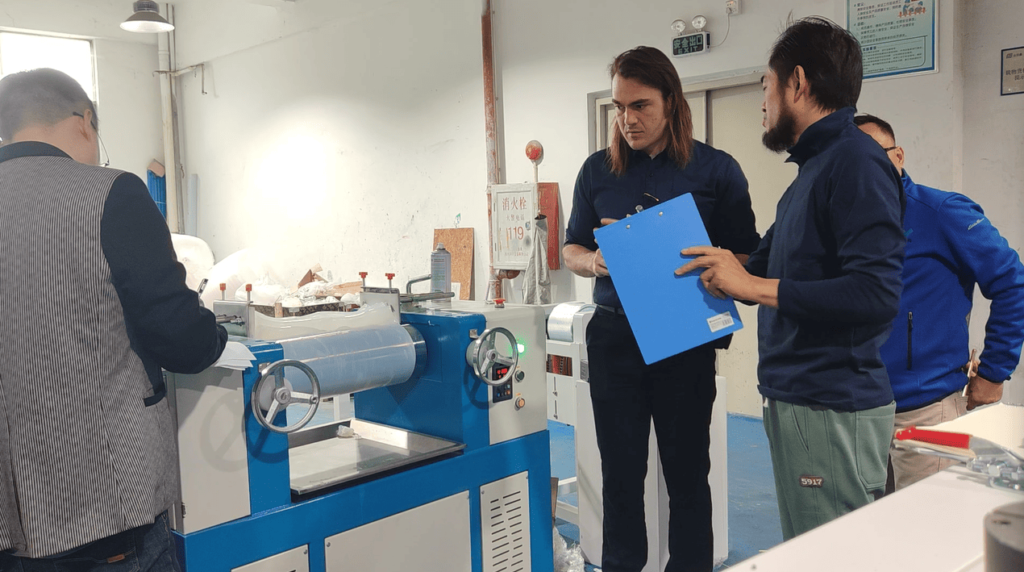
At Silicon Extrusion Tech, I provide the bridge between the material and the machine. When a client tells me they have chosen a specific brand from the top 10 list, I adjust the machine configuration before it even leaves our factory in Dongguan. I’ve spent thousands of hours in workshops, and I know the “temperament” of these different materials.
The Three Pillars of Machine-Material Synergy
First, we look at the Screw Design. For high-viscosity silicone like the ones from Elkem, we use a screw with a specific compression ratio to ensure no air is trapped. I remember a project in Saudi Arabia where the client was using a very stiff silicone to handle the heat. We had to customize the screw with a special alloy coating to prevent wear.
Second, we consider the Cooling System. Some 2026 formulations from brands like Shin-Etsu cure very fast. If your extrusion head isn’t cooled properly, the material will vulcanize inside the machine. I design our machines with dual-channel cooling to keep the head at a steady 25°C, even if the factory floor is 40°C.
Third, we focus on Mold Calibration. As I discussed with Shane, the R&D engineer, different silicones have different “die swell.” This means the material expands when it leaves the mold. My experience in CNC process allows me to calculate the exact mold dimensions for each brand. If you switch from Wynca to Dow, you might need a new mold core to keep your dimensions within a 0.1mm tolerance.
Technical Specification Table for 2026 Extrusion Lines
| Machine Feature | Benefit for Top Brands | Tech Detail |
|---|---|---|
| Precision Feeder | Constant pressure | Prevents “pulsing” in the strip shape |
| 10-Stage Heat Zone | Perfect curing gradient | Eliminates bubbles in thick silicone layers |
| Laser Diameter Gauge | Real-time monitoring | Guarantees +/- 0.05mm precision |
| PLC Memory | Recipe storage | Save settings for different silicone brands |
Final Thoughts from Eason’s Experience
In my 10 years of selling LED strip extrusion equipment, I have learned that the best clients are those who view the material supplier and the machine manufacturer as a single team. When I visited our client in Poland last year, we spent three days just fine-tuning the machine for a new “super-matte” silicone from Wacker. By the time I left, they had a production line that could run 24/7 with zero supervision.
Whether you are a seasoned pro like Shane or a new factory owner in Southeast Asia, I am here to provide that “seamless support.” I can introduce you to the right contacts at these top 10 suppliers and ensure that the machine I send you is perfectly tuned for their materials. This is not just about a sale; it’s about your long-term success in the 2026 LED market.
Choosing a top-tier silicone supplier like Dow, Wacker, or Wynca is the first step toward high-quality LED production. Combined with professional extrusion equipment and expert training, your factory will be unstoppable in 2026.
Would you like me to send you a material compatibility report for your current LED strip design?
- Tracking Machine for Silicon Extrusion: How to Ensure Stable Process Parameters
- Hiring the Perfect Extrusion Engineer in 2026: A Blueprint for Your LED Silicone Production Line
- Mastering the Factory Acceptance Test: A Live Guide to Silicone LED Strip Machine Commissioning
- Zero Waste Strategy: How to Reuse Tail Materials in Silicone LED Strip Extrusion
- Passing the Torch: Teaching Silicone LED Strip Extrusion Training to the Next Generation