
Are you struggling with high waste rates and low production efficiency after buying expensive machinery? Many factories fail because their staff lacks the technical skill to handle complex silicone extrusion processes. I provide expert on-site training to turn your investment into a high-speed profit center.
On-site training for an LED silicone extrusion machine ensures your team masters mold assembly, material refining, and machine calibration. This professional guidance reduces material waste, prevents costly downtime, and guarantees that your silicone LED strips meet strict international quality standards from the very first production run.

Starting a new production line is always a challenge for any factory owner or R&D manager. You have the building, the power, and the machine, but you need the “soul”—the technical knowledge to make it work. At Silicon Extrusion Tech, we do more than just ship crates. I personally ensure that your team becomes experts. Let me take you through my recent journey to a client’s factory in the Philippines to show you how we bridge the gap between a machine and a finished product.
How Does 7-Day Intensive Training Build Your Production Capacity?
New operators often feel overwhelmed by the complexity of a silicone extrusion line, leading to fear of making mistakes. This hesitation slows down your entire production schedule and costs you money every hour. My intensive 7-day training program removes this fear by providing hands-on experience and clear, step-by-step instructions.
The goal of this training is to make your team self-sufficient so they can solve problems without waiting for a phone call. We cover everything from the basic machine start-up to the most advanced troubleshooting of the extrusion head. By the end of the week, your workers will handle the equipment with confidence and precision.
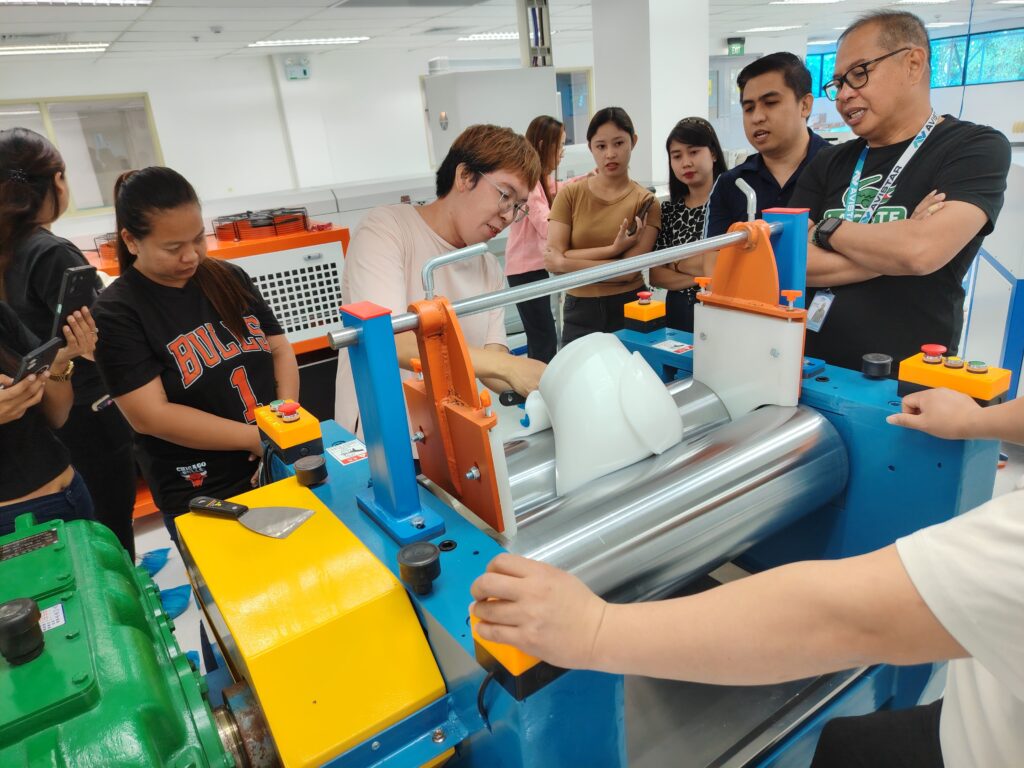
Mastering the Core of Silicone Extrusion
During my stay in the Philippines, I focused heavily on the “pre-production” phase. Many people think extrusion starts at the machine, but it actually starts at the material refining stage. We use a two-roll mill to refine the silicone. This process is critical because if the material is not mixed correctly with the vulcanizing agent and color pigment, the final LED strip will have bubbles or uneven color.
I spent two days just teaching the team how to handle the silicone. We looked at how the material feels and how it reacts to different temperatures. I taught them how to “warm up” the silicone so it enters the extruder at the perfect consistency. If the material is too cold, it puts too much pressure on the screw. If it is too warm, it might start to cure too early.
The Technical Details of the Extrusion Line
To help you understand why this training is so deep, look at the table below. It shows the critical components we master during the week:
| Training Module | Key Technical Focus | Objective |
|---|---|---|
| Material Refining | Vulcanizing agent ratio & color mixing | Ensure color consistency and proper curing. |
| Mold Assembly | Centering and gap adjustment | Achieve precise dimensions for the silicone jacket. |
| Temperature Control | 10-zone PID tuning | Prevent “scorching” or under-curing of silicone. |
| Traction Speed | Synchronization with extrusion rate | Maintain constant strip tension and prevent stretching. |
| Maintenance | Screw cleaning and lubrication | Extend the life of the machine and prevent clogs. |
Critical Thinking: Why Manual Skill Still Matters in an Automated World
Even though our LED strip extrusion machines are highly automated, the “human touch” remains irreplaceable. For example, during the mold assembly, a worker must feel the tension of the bolts. If one side is tighter than the other, the silicone wall thickness will be uneven.
I often tell my clients that a machine is like a high-end camera. Anyone can press the button, but only a trained photographer can take a masterpiece. I teach your workers to “listen” to the machine. Does the motor sound strained? Is the cooling water flowing at the right rate? These small details are what separate a premium LED factory from a struggling one. We also use liquid nitrogen in some high-speed setups to cool the extrusion head. Understanding how to manage these gases safely is a huge part of our on-site safety protocol.
Why Is Custom Mold Design the Secret to High-End LED Neon Lights?
Generic molds produce generic products that face heavy price competition in the global market. If your mold design is slightly off, your LED strip will have light leakage or won’t fit into the aluminum profiles properly. This leads to customer complaints and rejected orders that ruin your brand reputation.
My experience in CNC and hardware processing allows me to design molds that are tailored to your specific LED strip. Whether you are making a 10mm wide neon flex or a tiny medical-grade tube, the mold is the heart of the process. I help you develop custom molds that give you a unique edge in the market.
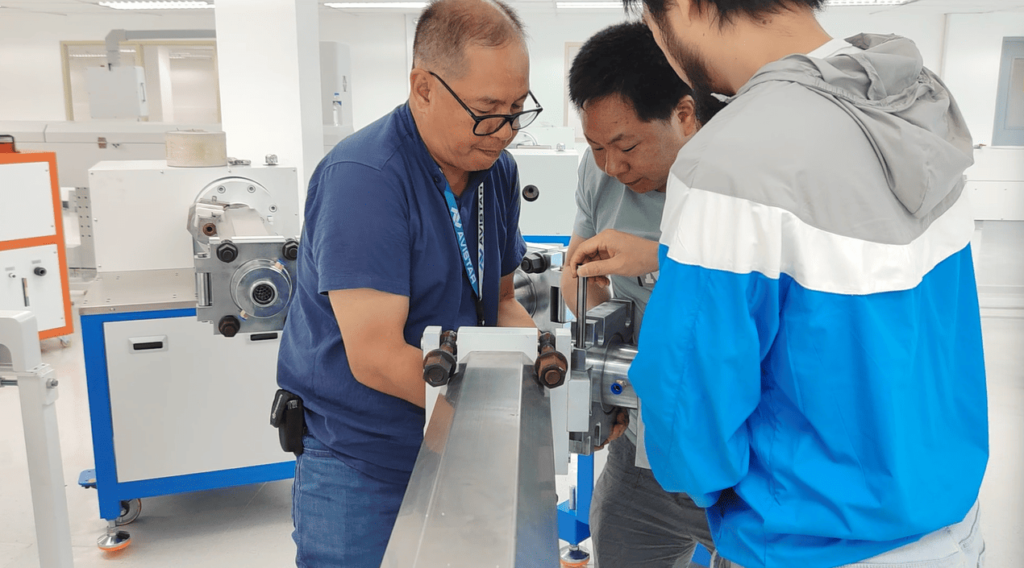
Bridging the Gap Between Design and Reality
When I work with an R&D engineer like Shane from America, the conversation is always about precision. Shane might have a beautiful 3D drawing of a new LED neon light. However, what looks good on a screen doesn’t always flow well through an extruder. Silicone is a high-viscosity fluid. It has “memory” and it expands slightly as it leaves the mold. This is called “die swell.”
I use my 10 years of industry experience to adjust the mold dimensions to account for this expansion. If Shane wants a 12mm finished product, the mold opening might need to be 11.8mm or 12.2mm depending on the hardness of the silicone. This is the “secret sauce” that we provide. We don’t just give you a machine; we give you the exact geometry needed for success.
Comparing Different Mold Types for LED Production
| Mold Type | Application | Difficulty Level | Benefit |
|---|---|---|---|
| Single-Color Extrusion | Basic silicone tubing | Low | High speed, low cost. |
| Co-extrusion (2 colors) | Neon strips with white/base colors | Medium | Professional finish, no light leakage. |
| Triple-Extrusion | Complex LED strips with wire cores | High | Extremely durable, high-end market. |
| Medical Grade | Precision tubing | Very High | Zero contamination, strict tolerances. |
The Importance of Surface Treatment
Many clients forget that the mold surface affects the finish of the silicone. If the mold is not polished correctly, the LED strip will look dull or have “chatter marks.” Because I know hardware and surface treatment techniques well, I can guide your local toolmakers or provide you with perfectly finished molds from my factory in Dongguan. This seamless support ensures that your silicone LED strip production stays ahead of the competition.
I remember a project in Russia where the client wanted a very matte finish on their silicone. We had to sandblast the interior of the mold with a specific grade of ceramic beads. It took three tries to get it right, but because I was on-site, we solved it in two days instead of two months of shipping parts back and forth.
How Do You Choose the Best Silicone Material for Your Local Market?
Using the wrong silicone material can lead to yellowing, cracking, or poor light transmission. Many factory owners try to save money by buying cheap local silicone, only to find that it doesn’t work with their machine or their molds. This causes constant production stops and wastes thousands of dollars in wasted raw materials.
I provide a full material sourcing guide. I help you evaluate whether to buy locally or import high-quality silicone from China. I look at the Shore A hardness, the curing speed, and the UV resistance to ensure your product survives 5 years of outdoor use.

The Material Formulation Challenge
Let’s talk about the role of someone like Shane again. He needs to find the right silicone, additives, and assistant machines to implement his company’s plan. This is a huge job. Different brands of silicone have different price points and performance levels. For example, if you are selling to the Polish market, you need high UV resistance because of the European weather standards. If you are selling in Saudi Arabia, heat resistance is your number one priority.
I help Shane and his team test different formulations. We look at the “pot life” of the material—how long it stays usable after mixing. We also look at the “transparency rate.” If the silicone is too cloudy, it will eat up the lumens from the LED strip, making the light look dim.
Material Performance Comparison Table
| Property | Standard Silicone | High-Performance Silicone | Impact on Product |
|---|---|---|---|
| Tensile Strength | 6.0 MPa | 9.0+ MPa | Durability and “stretch-ability” |
| Elongation at Break | 300% | 500%+ | Flexibility for tight corners |
| Yellowing Resistance | 1 year | 5 years | Brand reputation and longevity |
| Curing Temp | 180°C | 150°C | Energy savings and speed |
Critical Analysis: Local vs. Imported Silicone
One of the most common questions I get is: “Eason, can I buy silicone in my own country?” The answer is usually “Yes, but…” Local silicone might be cheaper because you save on shipping and taxes. However, it might not be formulated for high-speed extrusion.
During my training in the Philippines, we compared a local brand with our recommended brand from China. The local brand was 15% cheaper, but it had a higher rejection rate because the viscosity varied from batch to batch. We calculated that the “cheap” silicone actually cost the client more money because they had to throw away 10% of their finished LED strips. This is the kind of critical economic analysis I bring to your factory. I don’t just sell machines; I help you build a profitable business.
Why Is Rapid Cross-Border Technical Support Non-Negotiable?
When a machine breaks down in a foreign country, every minute of downtime is a disaster. If your supplier is in China and you are in Russia or the Philippines, a simple technical misunderstanding can stop your factory for weeks. This lack of support is the biggest risk for international buyers of complex automation equipment.
I solve this problem with my “Rapid Response” philosophy. Because I have been to these countries personally, I understand the local infrastructure. I know the power grids in Manila, the shipping routes in Vladivostok, and the business culture in Riyadh. I provide seamless support that covers everything from parts to software updates.
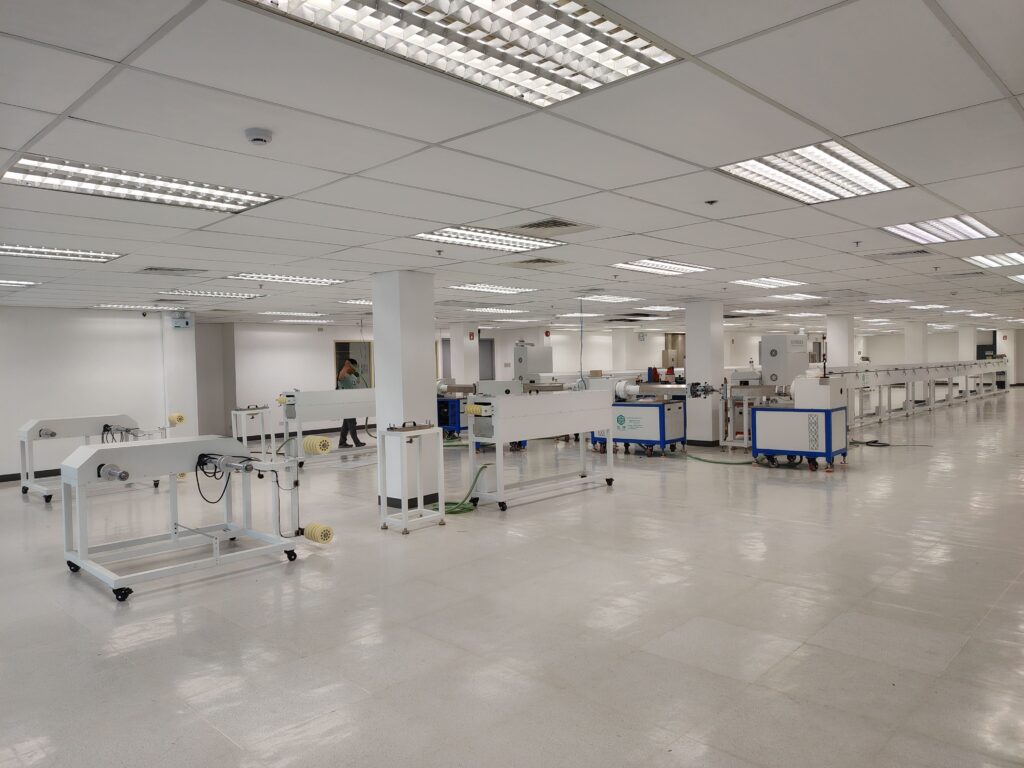
Building a Long-Term Partnership
My job doesn’t end when I fly back to China. In fact, that is when the real partnership begins. I stay in touch with my clients via WhatsApp and WeChat. If they have a problem at 2:00 AM, I am often the only one who can answer their questions. I have two sons at home, and I want to show them the value of hard work and global friendship.
During our trip to the Philippines, the clients were so happy with the training that they took us on a trip to see the Taal Volcano. This kind of relationship is why I love my job. We aren’t just buyer and seller. We are partners in the LED lighting revolution. When they succeed, I succeed. This personal connection ensures that I will always prioritize their technical needs.

Global Experience Advantage
My experience in different countries allows me to predict problems before they happen. Look at the different challenges I have solved:
- Russia: Dealing with extreme cold and its effect on silicone storage.
- Philippines: Managing high humidity and preventing mold growth in the workshop.
- Saudi Arabia: Cooling the extrusion line effectively in 45°C ambient heat.
- India: Stabilizing the machine against frequent power fluctuations.
Each of these countries taught me something new. I bring all that knowledge to your factory. I can advise you on the best workshop layout, the best electrical protection, and even the best way to train your specific cultural demographic of workers.
Professional on-site training is the bridge between buying a machine and owning a successful factory. It ensures quality, reduces waste, and empowers your team to compete globally.
Would you like me to review your current workshop layout or help you design a custom mold for your next LED project?
- Hidden Cost Analysis: 5 Ways a Low-Price Silicone Extruder Will Kill Your Factory Profits in 2026
- 2026 Maintenance Guide: How to Extend the Life of Your High-Precision Silicone Extrusion Molds
- 2026 LED Silicone Extrusion Industry Trends: The Perfect Fusion of COB LED Strips and Silicone Sleeves
- Why is the mold the heart of your LED silicone strip extrusion machine success?
- 5 Key Differences Between Silicone and PVC Extrusion Machines: Why Your Factory Must Switch to Silicone in 2026