
Are you struggling with high scrap rates and inconsistent light quality in your neon flex production? If your factory is wasting expensive silicone material due to air bubbles or uneven edges, you are likely missing the technical secrets of proper machine synchronization.
An LED silicone strip extrusion machine creates high-quality neon flex by precisely layering silicone over a PCB using co-extrusion technology. Success depends on balanced pressure across three extruders, precise mold tuning, and expert on-site calibration to eliminate air bubbles and ensure the sharp, opacifying edges required for high-end lighting.
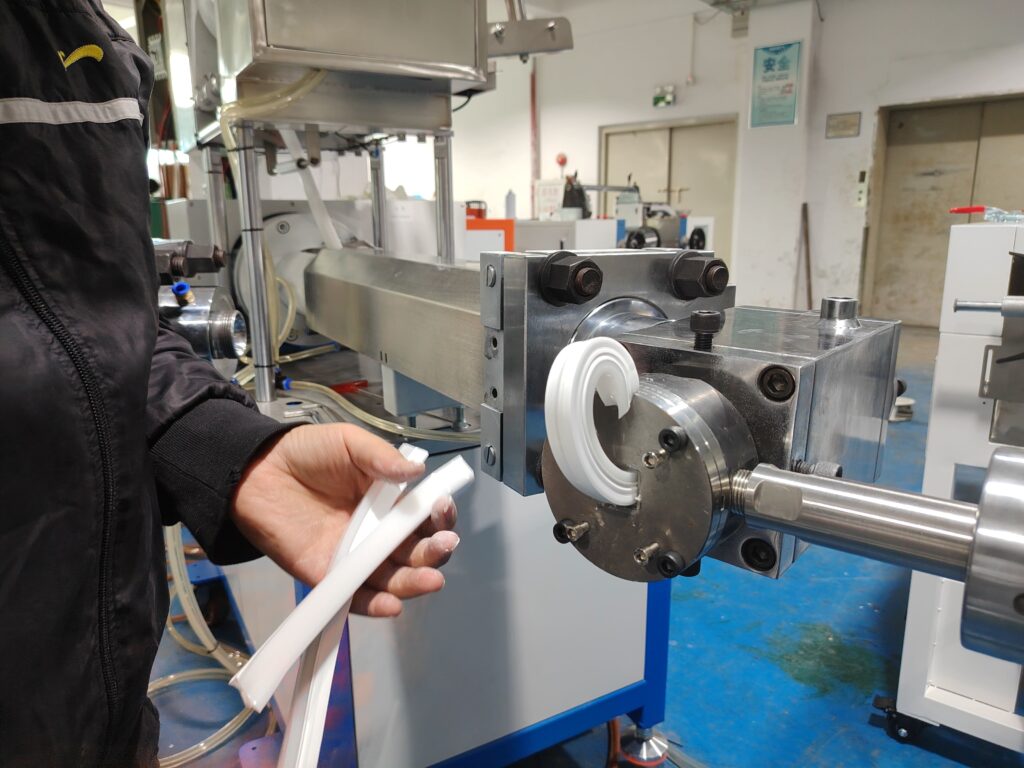
Many factory owners focus only on the price of the hardware, but they forget that a production line is a living system. I have spent over five years traveling from China to factories in Russia, Saudi Arabia, Poland, and India to set up these lines. I know that the difference between a successful factory and a failing one is the “soul” of the technical setup. If you want to see the specific configurations we offer, you can explore our LED silicone strip extrusion machine models. I have two sons, and I often tell them that in engineering, just like in life, you must get the foundation right before you can build something beautiful. This article is your guide to getting that foundation right.
How does synchronized feeding for three extruders prevent 3-color co-extrusion defects?
Are you tired of seeing color bleeding or “material gaps” in your 1615 neon strips? When three machines work together to create one product, even a small pulse in material feeding can ruin the entire batch of expensive silicone.
Synchronized feeding for an LED silicone strip extrusion machine involves locking the screw speeds of three independent barrels via a centralized PLC. This ensures that the transparent diffuser, the white reflective base, and the colored side layers meet inside the mold at the exact same pressure, preventing color mixing.
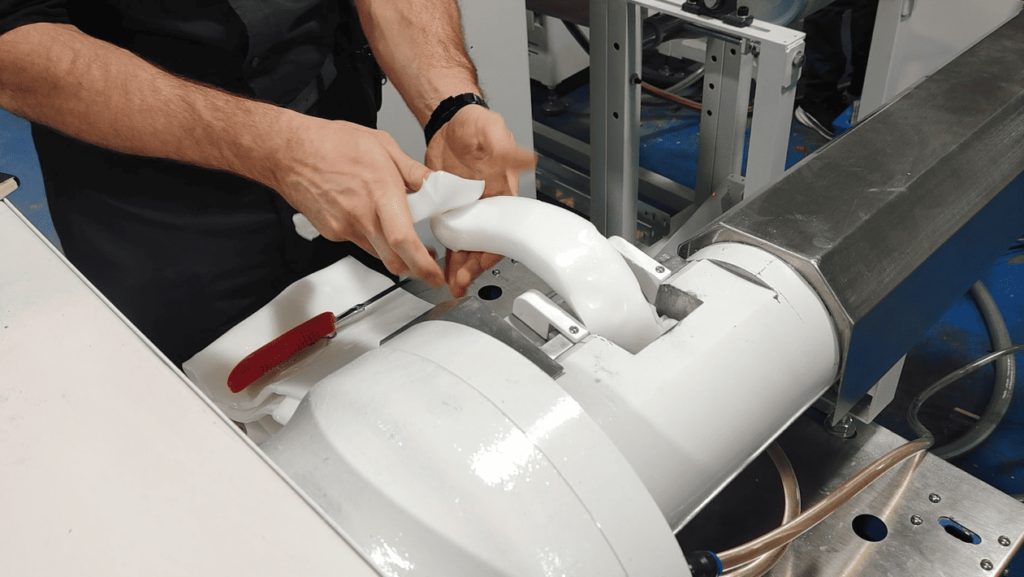
In my experience, especially when working with R&D engineers like Shane from the USA, the biggest challenge is the “rheology” of the silicone. I remember a project in India where we were installing three extruders for a 1615 front-emitting strip. The local team was trying to feed the machines manually, but the pressure was never stable. I used my knowledge of CNC processes and hardware techniques to explain that if the “transparent top” layer pushes harder than the “white base,” the reflective edge will become wavy. We call this the “opacifying edge not even” defect. By using a integrated feeding solution, we can ensure the material enters the screw at a constant rate.
Managing three extruders is like playing a basketball game; if the three players are not in sync, the play fails. I stay on-site for 7-14 days to help your staff grasp these key points. We look at the motor torque for each barrel. If one motor is working harder, there might be a clog in the mold or a temperature mismatch. I read a lot about economics, and I know that the cost of silicone is high. You cannot afford to have 20% waste because your feeding system is poorly timed. We provide a full machine proposal that includes these synchronized controls to make sure you meet the competition of the high-end LED market. My work is to solve these problems from our manufacture to your factory floor.
| Feeding Parameter | Standard Requirement | Impact on 1615 Quality |
|---|---|---|
| Screw Synchronization | +/- 0.1 RPM | Ensures sharp color boundaries. |
| Material Hardness | Shore A 20-70 | Affects the fusion of layers. |
| Hopper Cooling | 20-25°C | Prevents premature curing in the feeder. |
| Pressure Monitoring | Digital PLC Readout | Identifies blockages before they cause scrap. |
I enjoy visiting different factories because every environment is unique. In Russia, the workshop temperature affects the silicone viscosity differently than in Saudi Arabia. This is why on-site training is irreplaceable. I help your team adjust the feeding rates based on the specific brand of silicone you buy locally. If you cannot find the right additives, we can even provide those for you from our network in China. It is a huge work to confirm every detail, but this is the only way to reach a “Perfect Shape” that gets off the conveyor belt ready for sale.
Why is manual mold tuning the “secret weapon” for achieving a perfect neon flex shape?
Are you frustrated that your strips come out “unshaped” or warped, even when using expensive machines? A mold fresh from a CNC machine is rarely “perfect” for every type of silicone material.
Manual mold tuning for an LED silicone strip extrusion machine involves hand-polishing and slightly widening material channels inside the S136 steel core. This “fine-tuning” compensates for specific silicone flow characteristics and ensures that the final 1615 or 1212 profile has sharp corners and flat surfaces.
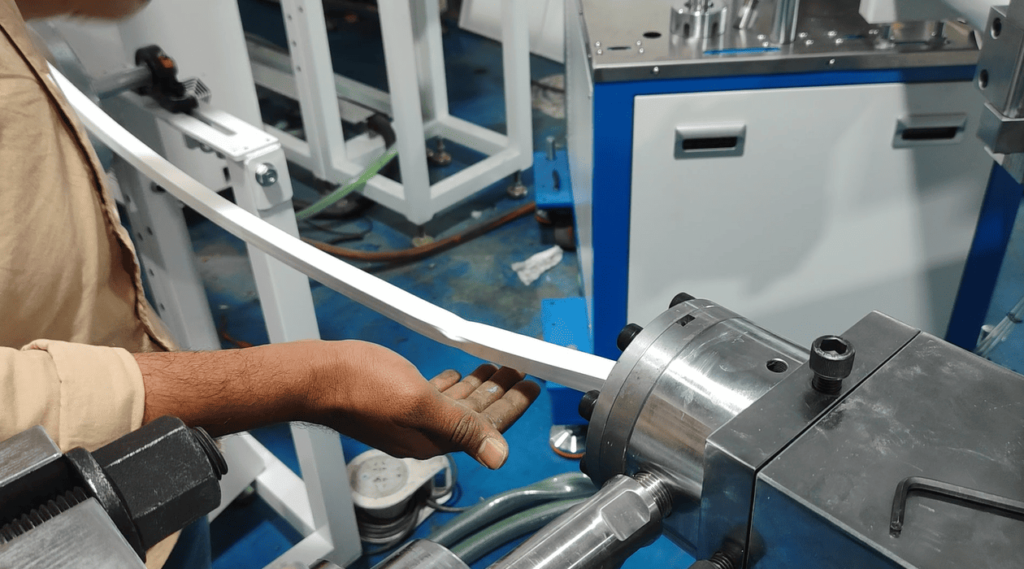
I have seen many “unshaped” defects in my travels to Poland and Vietnam. You can see in the photo that if you touch a strip and it loses its shape, the problem is often in the cooling or the mold path. As a skilled sales engineer, I have learned that you cannot rely on automation alone. You need a human touch. I often take a small rotary sanding tool and personally modify the inner mold path to “increase material feeding” to the corners. This is a skill I learned from years of studying surface treatment techniques. Shane, the R&D engineer, might provide a beautiful drawing, but the LED silicone strip extrusion machine needs a mold that understands how silicone actually behaves under pressure.
When I am in your factory for 10 days, I train your engineers to do this work. We look at the “cross-sectional shape detection.” If the bottom of the strip is uneven, we know the material is hitting a “dead zone” in the mold. We dismantle the die head and smooth that area. I love hiking because it teaches me that you have to adjust your pace to the terrain. Extrusion is the same. You adjust the mold to the material. This manual tuning is the irreplaceable advantage I offer. Most suppliers just ship a machine; I ship a solution that produces perfect neon profiles. I have the experience to create products that meet international business practices and high-end architectural standards.
| Mold Feature | Precision Level | Purpose |
|---|---|---|
| Core Material | S136H Mirror Polished | Prevents surface drag marks. |
| Mouth Die Gap | +/- 0.02mm | Defines the final dimension (e.g., 16*15mm). |
| Vacuum Channels | Multiple 0.5mm slots | Holds the silicone against the core. |
| Fusion Zone | Tapered Entry | Where the three colors merge into one. |
I always tell my customers that a machine is just hardware, but the mold is the heart. If the heart is not tuned, the machine will never run at full speed. I take interest in politics and economics because it helps me understand why a customer in Iran might need a different machine configuration than a customer in Germany. I provide the machine proposal and quotation only after I understand your LED strip light sample. Whether you need to produce medical tubes or neon flex, the mold logic remains the most critical factor. We solve any problems from manufacture to your factory, ensuring you form a productive force quickly.
How do you eliminate air bubbles and material gaps in the silicone encapsulation?
Do you see small bubbles trapped inside your transparent diffuser? These “bubbles in LED strip” defects lead to light spots and water ingress, making your product fail IP67 waterproof tests.
To eliminate bubbles in an LED silicone strip extrusion machine, you must optimize the two-stage vacuum system in the barrel and ensure the silicone material is de-aired before feeding. Proper vacuum pressure at the mold entry prevents air from being trapped between the LED PCB and the silicone skin.
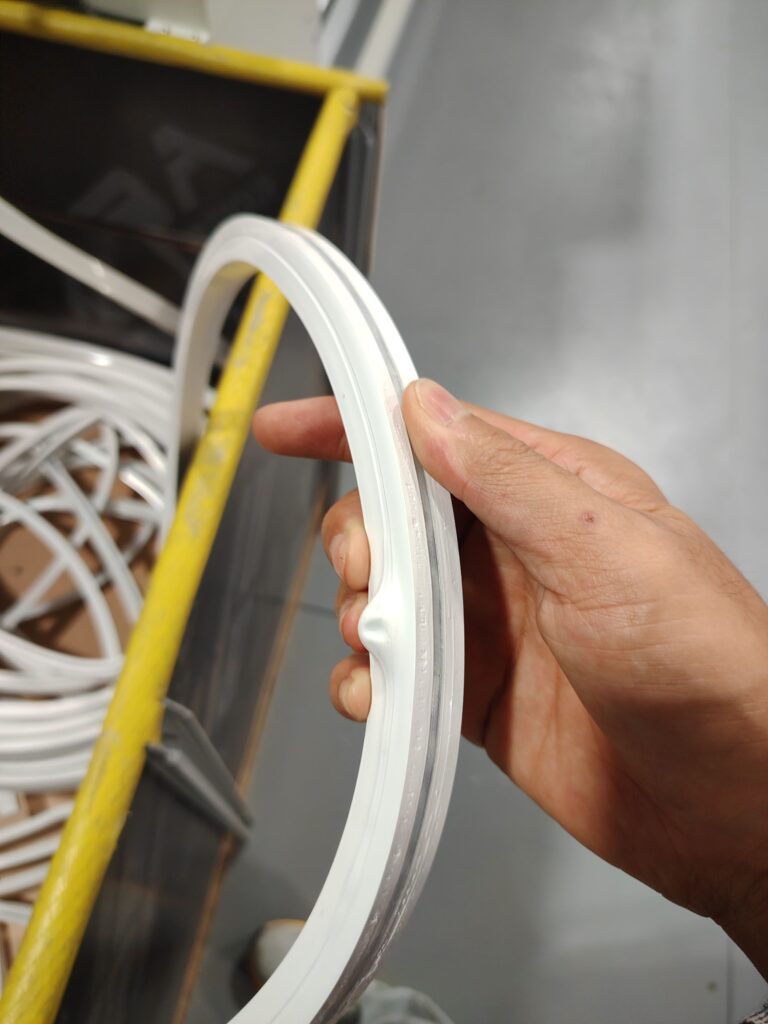
During an installation in Saudi Arabia, we faced a major “bubbles” problem. The customer was using a high-viscosity silicone that trapped air easily. I worked with their electronic engineer to calibrate the vacuum pump timing on the LED silicone strip extrusion machine. We also found that the LED strip was being fed with too much tension, creating a small “gap” where air could hide. I used my basketball experience to explain that the “timing” of the strip and the silicone must be perfect. If the strip pulls too fast, you get a “material gap.” If it’s too slow, it folds. You can see how we solve these encapsulation challenges on our blog.
We also have to look at the “opacifying edge” quality. If there are bubbles at the boundary of the colors, the strip will eventually peel apart. I use a critical thinking approach: is the air coming from the material or the machine? I stay on-site for 7-14 days to test both. I’ve found that many times, the feeding hopper is not sealed correctly. By fixing the seal and adjusting the screw RPM, we can achieve a crystal-clear output. I know the international business practices well, and I know that high-end clients in Poland or the USA will not accept even one bubble. My mission is to ensure your factory meets these standards every time.
| Defect Source | Diagnostic Sign | Solution |
|---|---|---|
| Material | Tiny bubbles throughout. | Refine the raw siilcon material well |
| Machine Barrel | Large, irregular voids. | Need change the screw barrel |
| Mold Exit | Bubbles only on the surface. | Clean the die head and check for burrs. |
| Feeding Gap | Voids around the LED board. | Synchronize the strip tensioner. |
I have a strong interest in politics and economics, and I see that the global demand for high-quality silicone products is rising. Whether you are producing LED strips or silicone medical tubes, the goal is the same: zero defects. I provide the machine proposal, the mold design, and the training to reach that goal. I have two sons, and I want them to grow up seeing that their father builds machines that light up the world without flaws. If you are ready to stop making scrap and start making profit, I am your authentic technical partner.
Why is engineering collaboration the fastest way to turn your machine into a productive force?
Are you worried that your local staff won’t be able to operate a complex three-color line? Technical downtime in the first month can cost you thousands of dollars in lost orders.
Collaborating with an expert sales engineer during the installation of your LED silicone strip extrusion machine ensures that your team learns the “key points” of maintenance and troubleshooting. A 7-14 day on-site training period transforms local workers into a skilled team capable of consistent high-volume production.
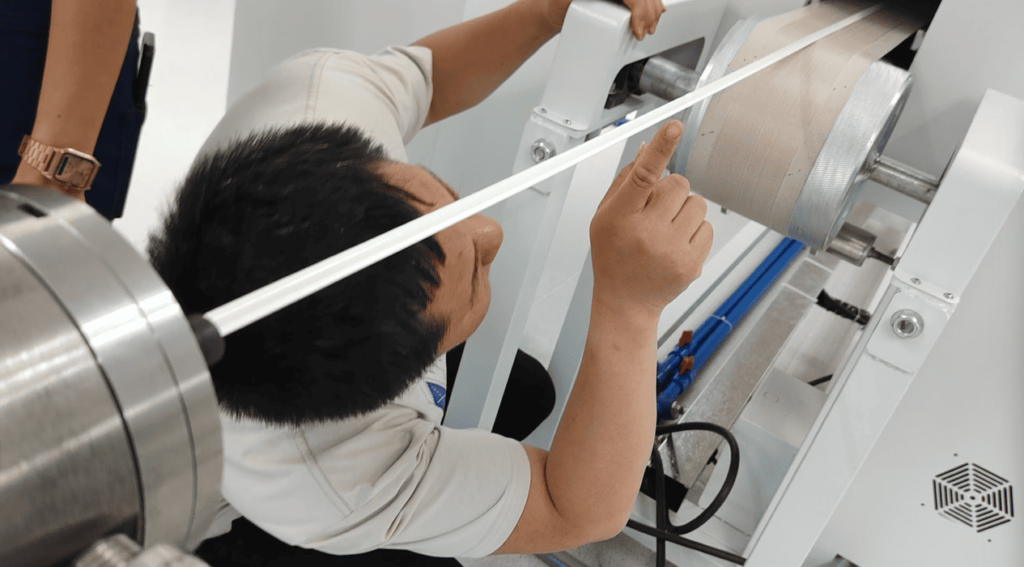
In India, I spent two weeks working with a team of local engineers and electricians. We were setting up three extruders and a precision mold. I don’t just stand there and watch; I get my hands dirty. We dismantle the mold together. We look at the “uneven silicon material extrusion bottom defects” and fix them together. This hands-on training is how your employees领会到 (grasp) the real secrets of the process. I enjoy playing basketball because it teaches me about teamwork. My engineer and your electricians must work as one team to get the LED silicone strip extrusion machine running.
I often help R&D engineers like Shane finalize their product designs. He provides the drawings, and I tell him if the silicone can actually flow into that shape. This “seamless support” from design to production is my irreplaceable advantage. I have experience in creating products and I know the CNC process inside out. I know that for a factory in a country like Russia or the Philippines, getting a technician to visit is expensive. That is why I make sure your team is fully independent before I leave. We provide the material, the additives, and the machine. We do the huge work to confirm every detail. You can read more about our global installation stories to see our footprint.
| Training Phase | Focus Area | Skill Acquired |
|---|---|---|
| Days 1-3 | Hardware Assembly | Mold dismantling and cleaning. |
| Days 4-6 | PLC & Control | Managing screw synchronization. |
| Days 7-10 | Quality Control | Identifying and fixing bubbles/gaps. |
| Days 11-14 | Full Production | Running the line at industrial speed. |
I like reading and visiting different factories because I am always learning. I take what I learn in Saudi Arabia and apply it to a project in Poland. This global perspective helps me solve any problems from manufacture to your factory. I know that Shane or David needs a machine that is reliable. My machines are built in Dongguan, the heart of China’s hardware industry, using the best surface treatment techniques. I am not just selling you a machine; I am selling you my 5 years of experience and my commitment to your success. When you are ready to finalize your order, you will have a partner who understands your business as well as you do.
Conclusion
Mastering the LED silicone strip extrusion machine requires a combination of high-precision hardware and expert on-site training. By focusing on mold tuning and team collaboration, you can achieve perfect, defect-free neon flex for the global market.
Are you ready to turn your production challenges into a profitable reality?
Don’t let air bubbles, uneven edges, or material waste slow down your factory’s growth. Whether you are based in India, Poland, Saudi Arabia, or anywhere else in the world, I am ready to bring my 5 years of field experience and our precision engineering directly to your floor.
Send me your LED strip samples or design drawings today, and I will personally provide you with a customized machine proposal and a detailed quotation including a material starter kit. Let’s work together to ensure your LED silicone strip extrusion machine becomes your most valuable asset.
Get Your Custom Technical Proposal Now
From Our Factory to Your Success – Authentic LED Strip Extrusion Solutions